


New Online Sellers Must Know: How to File Taxes for Online Sales in Thailand
Today’s world is all about convenience. Almost everything is ordered online, making online selling a popular career. However, before starting, it’s essential to understand your tax obligations. Many people are still unsure about filing and paying taxes for online sales, such as:
Do online sellers need to pay tax? How much tax is required?
At what income level must you file taxes?
What documents are needed?
How is tax calculated for online sellers?
Let’s find out together!
Quick Guide
- What type of tax do online sellers need to file?
- When do online sellers need to file taxes?
- Do frequent bank deposits mean you must pay e-Payment tax?
- How to prepare a tax filing for online sales

1. What Type of Tax Filing Do Online Sellers Need?
New online sellers, take note! No matter what you’re selling, if you generate income, you are required to file taxes. Since you are still considered an individual taxpayer, this falls under personal income tax obligations.
Whether or not you will have to pay taxes depends on your net income or net profit after deducting expenses.
If you earn income from online sales, you must file income tax under Category 8 (Section 40(8)) once your annual income exceeds: * 60,000 THB (for single individuals), or * 120,000 THB (for married couples).
When filing taxes for online sales, you can choose between two expense deduction methods: actual expenses or a standard 60% deduction.
Actual Expense Deduction
This method is suitable for online businesses with high operating costs. By deducting real expenses, individuals with significant costs can reduce their net taxable income, thereby lowering their tax burden.
To use this method, you must maintain accurate records of income and expenses, along with supporting documents. This makes tax filing easier to review and helps prevent confusion during the process.
Standard 60% Deduction
This option is most suitable for businesses with high profits. If your real profit margin (after expenses) is greater than 40%, it means your actual costs are less than 60% of total income.
The benefit of this method is that you don’t need to show receipts or expense documents to the Revenue Department. You also gain a tax advantage from the difference between your actual expenses and the standard 60% deduction.
2. When Do Online Sellers Need to File Taxes?
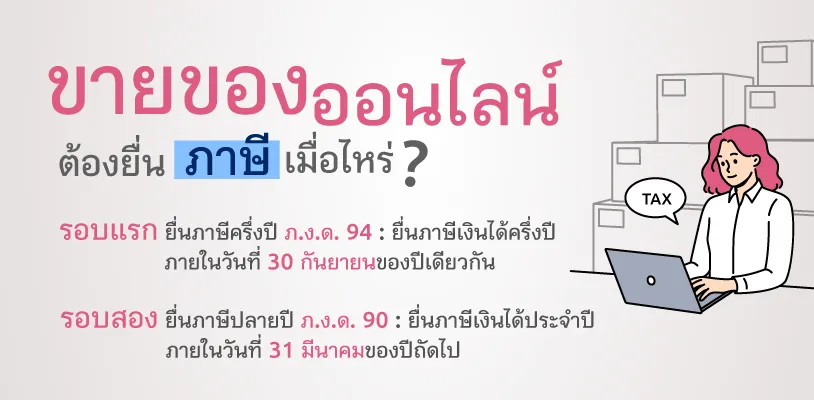
Individuals who earn income from online selling whether alongside a full-time job or as their main source of income are required to file income tax. For online business income, tax filing must be done twice a year (Forms PND.94 and PND.90) according to the schedule set by the Revenue Department, as follows:
- First Round: Mid-Year Tax Filing
File tax on income earned between 1 and 30 January using Form PND.94, within the period of July 1 – September 30 of the same year.
The purpose of mid-year tax payment is to help reduce the burden for taxpayers so they don’t have to pay a large amount at once at the end of the year. - Second Round: Annual Tax Filing
File tax on the total annual income using Form PND.90, within the period of January 1 – March 31 of the following year.
(Example: Income from 2021 must be filed by March 2022.)
In addition, online sellers with an annual income exceeding 1.8 million THB are required to register for VAT (Value Added Tax) and file VAT returns every month by the 15th of the following month, as well as issue tax invoices to customers.
3. Do Frequent e-Payment Transactions Require Paying Taxes?
Using e-Payment is convenient, but online sellers need to understand the related tax obligations and prepare accordingly. This ensures smooth business operations and helps avoid future tax issues.
Many first-time online sellers often wonder: “Do I need to pay tax if I receive money through e-Payment?”
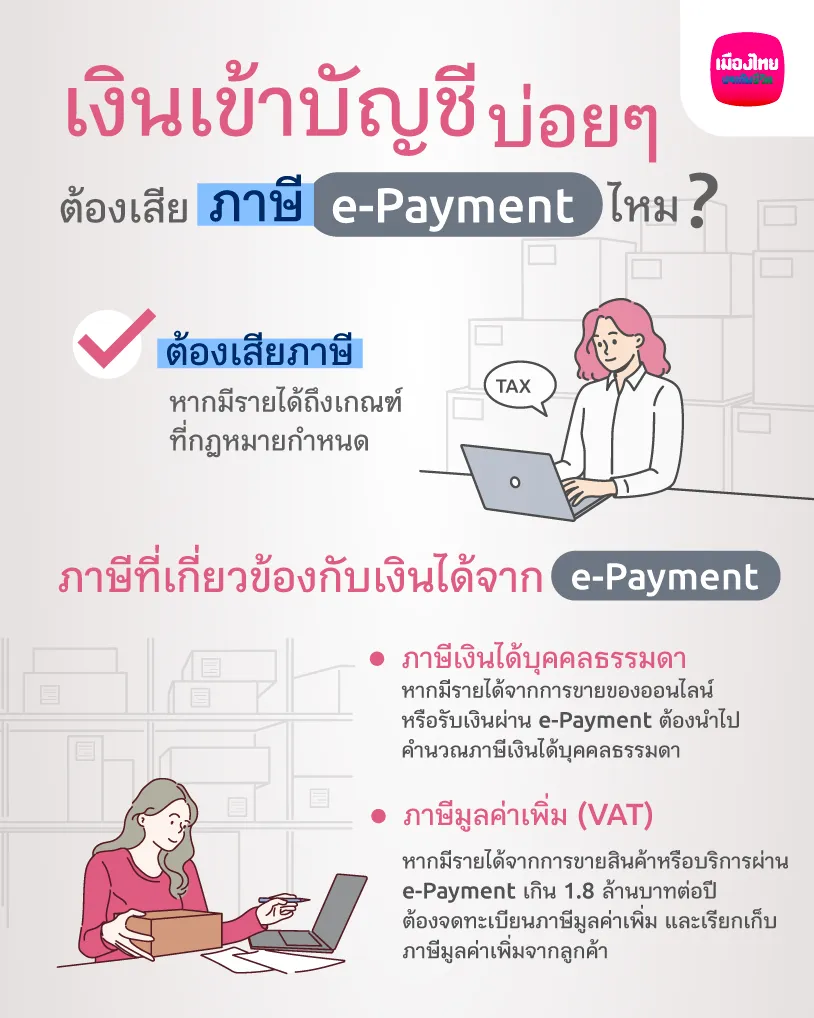
The answer is yes—you must pay taxes if your income meets the thresholds set by law.
- Information Reporting to the Revenue Department
Banks are required to report to the Revenue Department if their transactions fall under “specific transaction patterns.” This rule applies not only to online sellers but also to anyone who frequently deposits or receives transferred funds.
- Responsibilities of Online Sellers
If you are selling online, you should:
- Keep proper income and expense records.
- Store receipts and related documents.
- File your taxes completely and on time.
Taxes Related to e-Payment Income
- Personal Income Tax
If you earn income from selling online or through other e-payment channels, it is considered assessable income under Section 40(8). You must include this income when calculating your personal income tax.
- Value-Added Tax (VAT)
If your income from selling goods or services via e-Payment exceeds THB 1.8 million per year, you are required to register for VAT and charge VAT to your customers.
Tax Filing Thresholds
- Net Income: If your net income (income minus expenses) exceeds THB 150,000 per year, you are required to file personal income tax.
- Online Sales Income: If your income from online sales exceeds THB 60,000 per year, you must file personal income tax.
Tax Filing Forms and Deadlines
- Form PND 90: Annual personal income tax return. Must be filed by March 31 of the following year.
- Form PND 94: Mid-year personal income tax return. Must be filed by September 30 of the same year.
Bank Transaction Monitoring Rules
Your bank accounts may be subject to monitoring and reporting if:
- You make or receive deposits 3,000 times or more per year, regardless of the total amount.
- You make or receive transfers 400 times or more per year, with a total amount exceeding THB 2 million annually.
If any of these conditions apply, the bank has the right to forward your transaction details to the Revenue Department. Therefore, it’s best to ensure compliance with the law and avoid tax evasion.
4. Preparing to File Taxes for Online Sellers
If you’re starting your journey as a new online seller, proper tax planning is essential. Missing documents or making even small mistakes in the process could cause issues when filing your taxes. Here are key points to know:
4.1. Understand the Relevant Taxes
- Personal Income Tax (Form P.N.D. 90/94):
Online sellers who earn income from selling products or services must report it as taxable income under Category 8 (40(8)). The filing requirements are: - Form P.N.D. 90: Annual income tax return, due by March 31 of the following year.
- Form P.N.D. 94: Mid-year income tax return, due by September 30 of the same year.
- Value Added Tax (VAT):
If your annual revenue from selling goods or services exceeds 1.8 million THB, you must register for VAT (Form P.P. 01) within 30 days of passing this threshold. VAT returns must then be filed monthly using Form P.P. 30, due by the 15th of the following month.
4.2. Keep Accurate Income and Expense Records
Maintaining a proper income-expense account will make tax calculations easier and serve as essential proof if audited by the Revenue Department.
- Keep all documents related to purchases and sales, such as receipts and tax invoices, in an organized manner.
3. Calculate Income and Expenses
- Income: Includes all money received from selling products or providing services online.
- Expenses: Covers product costs, shipping fees, packaging costs, advertising, and any other business-related expenses.
- Net Income = Income – Expenses. This figure is the basis for calculating your personal income tax.
4. File Taxes Correctly
Before submitting, review all information carefully to avoid future complications.
- You can file taxes online via the Revenue Department’s website or in person at the Revenue Office.
Even though filing taxes for online sales may involve several steps, it’s not too complicated for new online sellers to handle. Think of the benefits of paying taxes properly, not only does it keep you safe from Revenue Department audits, but it also allows you to sell online with confidence and transparency.
As you prepare your tax filing plan, don’t forget to plan for tax deductions as well. You can enjoy double benefits both health protection and tax savings with the Comprehensive Health Insurance Plan from Muang Thai Life Assurance, which covers medical expenses from 200,000 THB up to 100,000,000 THB. Plus, your premiums can be used for tax deductions of up to 25,000 THB.
More details:
☑️ Call 1766 (available 24/7)
☑️ Contact a licensed life insurance agent
Please review the coverage details, terms, and exclusions carefully before making your insurance decision.
Source: Accessed on 11/02/2025
🔖 Thairath