

 750-500.webp?format=webp)
The Company prioritizes conducting its business in accordance with corporate governance principles under good governance, appropriate risk management, and the integration of sustainability issues covering Environmental, Social, Governance, and Economic (ESG) factors into its operations. Since 2022, the Company has announced a framework and policy for sustainable development to be implemented by all departments, ensuring concrete and consistent practices. A sustainable development management structure has been established to drive and communicate sustainability goals to the board, management, and employees, delivering long-term value to all stakeholders.
In addition, the company is committed to contributing to the achievement of the United Nations Sustainable Development Goals (SDGs) and aligning with climate change targets at both the national and international levels, including the Paris Agreement. The company also continues to develop its sustainability disclosure in accordance with international standards.
Goal: Driving a Sustainable Business
Commitment: To create sustainable returns by operating on strong corporate governance and risk management foundations of international standards, while focusing on value creation for society through sustainable products and investments.
Governance and Economic Aspect comprises main policies as follows:
Integrating Sustainability into Responsible Product Offering
Integration of sustainability considerations across Environmental, Social, Governance, and Economic (ESG) aspects guides the design, development, and delivery of products and services, creating sustainable value for all stakeholders comprehensively and fairly. The focus is on offering products with appropriately priced premiums reflecting current conditions and covering relevant risks, while also developing products that encourage positive behaviors, such as healthy living or accident prevention. A Product Governance policy is established to ensure that all products are of high quality, transparent, and fair. This includes product design, premium setting, access to products and services, monitoring and evaluation, and internal oversight, ensuring that operations comply with ethical standards and applicable laws.
This policy addresses the UN Sustainable Development Goals (SDGs):

Sustainable Investment
Establishing an investment policy in alignment with the principles of the United Nations Principles for Responsible Investment (UN PRI), by systematically integrating Environmental, Social, Governance, and Economic (ESG) factors into the investment decision-making process. In addition to applying the UN PRI principles in selecting investment assets and portfolio managers, the Company actively engages with investee companies (active ownership) to promote responsible business practices, mitigate ESG risks, and elevate operational standards, particularly on key issues such as climate change. The Company also develops climate-related disclosures in accordance with internationally recognized reporting frameworks.
This policy addresses the UN Sustainable Development Goals (SDGs):

Good Corporate Governance
Business operations are in accordance with the principles of Good Corporate Governance, which involves adherence to the Code of Conduct, transparency, accountability, and awareness of responsibilities to all stakeholders. The Company’s policies and business practices conform to applicable laws and regulations, including the implementation of a mechanism to prevent financial crimes and anti-corruption.
This policy addresses the UN Sustainable Development Goals (SDGs) :

Risk Management, Business Continuity Management and Financial Resilience
The process to identify, assess, respond and monitor the risks faced by the business which includes emerging risk and Business Continuity Management (BCM) to ensure that the amount of risk taken during business operation is in line with the defined risk appetite set out by the company , moreover, it covers Capital Adequacy Ratio (CAR) which shows the ability of an organization to withstand and recover from unexpected financial hardship and disruptions (Financial Resilience).
This policy addresses the UN Sustainable Development Goals (SDGs):

Market Conduct
Providing fair service to customers, focusing on their benefits, from product development and launch process, selection of sales representative, preparation before sales offering process, sales presentation process, after-sales service, as well as utilization of sales technology, life Insurance policy benefits payment and delay of life insurance policy indemnification, complaint handling, and data privacy to ensure that customers, beneficiaries or the person entitled to claim under the insurance policy are treated fairly, with quality, accountability and in accordance with relevant laws, rules, and regulations.
This policy addresses the UN Sustainable Development Goals (SDGs):
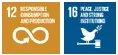
Cybersecurity and Data Protection
Implementing comprehensive cybersecurity measures, both technical and managerial, in accordance with internationally recognized standards, such as ISO/IEC 27001 or other relevant standards, as well as risk management best practices, to prevent unauthorized access, cyberattacks, and data breaches that may affect system security and the organization’s reputation. Operations are conducted in compliance with the Personal Data Protection Act B.E. 2562 (PDPA), ensuring transparent collection, use, storage, and disclosure of personal data, while respecting data subjects’ rights, including the right to access, correct, and delete information, as well as processes for obtaining consent and allowing withdrawal of consent. The Company also promotes a cybersecurity culture within the organization through continuous training and communication, enabling employees at all levels to understand, adhere to, and effectively implement cybersecurity and personal data protection practices.
This policy addresses the UN Sustainable Development Goals (SDGs):
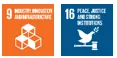
Digital and Green Innovation
Leveraging innovation and technology to develop and enhance operational processes, in order to improve service efficiency, reduce operational risks, and elevate the customer experience. This also includes promoting digital service delivery to minimize the environmental impact of business operations.
This policy addresses the UN Sustainable Development Goals (SDGs):

Sustainable Supplier Management
Establishing guidelines for sustainable supplier management by developing a Supplier Code of Conduct to encourage suppliers to adhere to ethical, transparent, and accountable business practices, combat corruption, and comply strictly with relevant laws, regulations, and standards. In addition, suppliers are encouraged to adopt responsible practices regarding human rights, labor, social, and environmental considerations, ensuring that supply chain operations are efficient, risks are mitigated, and opportunities for business collaboration are built on the foundation of responsibility and long-term sustainability.
This policy addresses the UN Sustainable Development Goals (SDGs):