


Nighttime Breathing Problems? Learn the Causes and Effective Ways to Improve Your Sleep
Obtaining quality sleep is crucial for maintaining overall health. However, if you often wake up feeling short of breath, struggle to take full breaths at night, or feel like your lungs can’t expand completely, it may affect both your sleep quality and long-term well-being.
In this article, we’ll explore the causes, symptoms, and remedies for nighttime shortness of breath. We’ll also answer common questions, such as what triggers breathing difficulties during sleep, which sleeping positions can help you breathe more easily, whether shortness of breath at night is dangerous, and when it’s time to see a doctor.
Skip ahead to the section that interests you:
1. What causes shortness of breath at night?
2. How to relieve nighttime shortness of breath
3. Is shortness of breath at night dangerous?
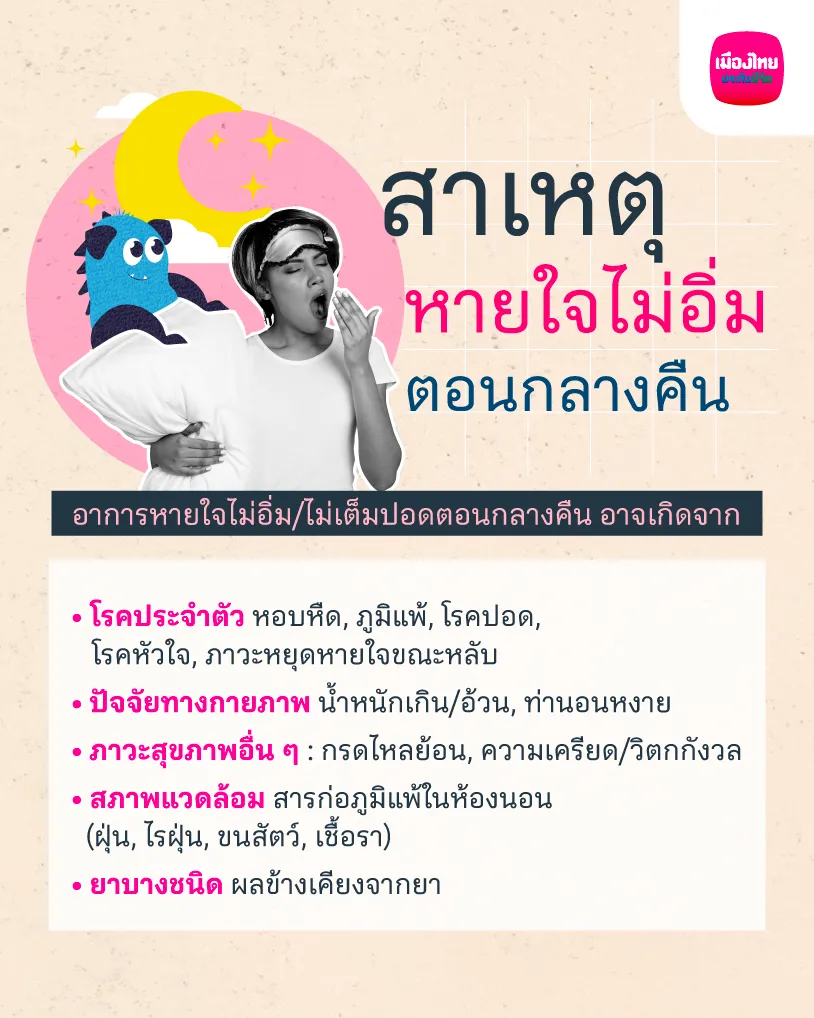
1. What Causes Shortness of Breath at Night?
Experiencing shortness of breath while sleeping—whether it feels like you can’t get enough air, your chest feels tight, or your lungs won’t fully expand—can be linked to several factors. In some cases, it’s simply related to sleeping posture, but it may also signal an underlying health condition. Common causes include:
- Asthma – Narrowed airways make it harder for air to flow in and out, often accompanied by coughing, chest tightness, or wheezing.
- Allergies – Exposure to triggers such as dust mites, pet dander, or mold can cause airway inflammation, leading to nighttime breathing difficulties.
- Lung conditions – COPD, pneumonia, or pulmonary fibrosis reduce the lungs’ ability to exchange oxygen efficiently.
- Heart disease – Heart failure can cause fluid buildup in the lungs, making it harder to breathe, especially when lying flat.
- Sleep apnea – Relaxation of the throat muscles may block airflow during sleep, causing pauses in breathing.
- Excess weight or obesity – Fat around the chest and neck can press on the airway when lying down, restricting airflow.
- Sleeping position – Lying on your back can cause the tongue and soft tissues in the throat to collapse, potentially blocking airflow.
- Acid reflux (GERD) – Stomach acid that flows back into the throat may irritate the airways, triggering coughing and breathing difficulty at night.
- Stress and anxiety – Emotional tension can affect breathing patterns, making you feel as though you can’t take a deep breath.
- Bedroom allergens – Dust, mites, pet hair, and mold can worsen allergy-related breathing problems while sleeping.
- Certain medications – Some medicines may have side effects that impact breathing.

2. How to Relieve Nighttime Shortness of Breath
Sleep should be a time for rest and recovery, but for many people, it becomes uncomfortable due to shortness of breath at night. The sensation of not getting enough air, feeling chest tightness, or waking up in the middle of the night struggling to breathe can greatly affect sleep quality and overall health. Don’t worry—there are several effective ways to ease nighttime breathing difficulties so you can return to deep, restful sleep.
1) Adjust Your Sleeping Position
- Sleep on your side – Especially the left side. This helps keep the airway open more effectively than lying on your back.
- Elevate your head – Use pillows to raise your head about 30–45 degrees to reduce chest pressure and make breathing easier.
- Avoid sleeping on your stomach – Face-down posture can compress the chest and lungs, restricting airflow.
2) Improve Your Bedroom Environment
- Keep your room clean – Vacuum, dust, and wash bedding regularly to reduce dust mites and allergens.
- Control temperature and humidity – Keep the room cool and comfortable with balanced humidity.
- Use an air purifier – Helps filter airborne particles and improve indoor air quality.
- Avoid irritants – Skip strong fragrances or sprays that may irritate the airways.
3) Adjust Your Lifestyle Habits
- Maintain a healthy weight – Weight loss can reduce pressure on the airway and improve breathing during sleep.
- Avoid heavy meals, caffeine, and alcohol before bed – Heavy meals may trigger reflux; caffeine and alcohol can disrupt sleep and breathing.
- Exercise regularly – Supports lung and heart health; avoid intense workouts close to bedtime.
- Manage stress – Try meditation, deep breathing, or calming music before bed.
4) Take Care of Your Health
- Consult a doctor – If symptoms are frequent, severe, or accompanied by other issues—especially with known heart, lung, or sleep apnea conditions.
- Follow prescribed treatment – Take medications consistently and exactly as directed.
Quick Relief Tips for Nighttime Shortness of Breath
- Sit upright – Prop yourself with pillows or sit on the edge of the bed with feet on the floor to open the airway.
- Practice deep breathing – Inhale slowly through the nose, hold briefly, then exhale gently through the mouth.
3. Is Nighttime Shortness of Breath Dangerous?
Many people wonder whether nighttime shortness of breath is dangerous. If it happens only occasionally with an obvious cause—like an uncomfortable sleeping position—it may not be serious. However, seek medical attention immediately if shortness of breath is accompanied by any of the following:
- Rapid or labored breathing, even at rest
- Chest pain or tightness
- Bluish lips or fingertips
- Wheezing while breathing
- Persistent cough or coughing up blood
- Unusual fatigue or weakness
- Excessive daytime sleepiness (possible sign of sleep apnea)
Don’t let nighttime shortness of breath disrupt your sleep or affect your health. By adjusting your lifestyle, improving your sleep environment, and consulting a doctor when symptoms persist, you can restore restful sleep and protect your overall well-being.
Another important step is to prepare for future healthcare needs. Since no one can predict when illness may occur, having the right health coverage provides peace of mind. With a comprehensive health insurance plan from Muang Thai Life Assurance, you can receive medical coverage ranging from 200,000 to 100 million baht, ensuring you won’t have to worry about treatment costs when you need care the most.
For more details:
☑️ Call 1766 (available 24/7)
☑️ Contact a Muang Thai Life Assurance agent or your preferred service channel
- Please review the terms, conditions, and exclusions carefully before purchasing insurance.
Sources:
🔖 Samitivej Hospital
🔖 MedPark Hospital
🔖 POBPAD