


How Much Does Kidney Disease Treatment and Dialysis Cost? Plan Ahead to Protect Your Savings
Kidney disease can create a heavy financial burden, especially in advanced stages such as chronic kidney failure, where patients may require dialysis or even a kidney transplant. Among these treatments, dialysis is the most common and often the most expensive due to its continuous, long-term nature.
Many patients wonder: Does the government’s universal healthcare cover dialysis? Can the 30-baht healthcare scheme be used? If not, how much should I prepare for dialysis costs at public vs. private hospitals?
The truth is, dialysis expenses depend on several factors, including the stage of kidney disease, the type of treatment, the hospital chosen, and the patient’s healthcare benefits. Below, we break down the key information you need to know.
3. Five symptoms that may indicate the need for dialysis
4. How much does dialysis cost?

1. What Is Dialysis?
Dialysis is a medical procedure that replaces kidney function when the kidneys can no longer work properly. It helps filter waste and excess fluids from the blood, maintains chemical balance in the body, and reduces symptoms caused by toxin buildup.
Why Is Dialysis Necessary?
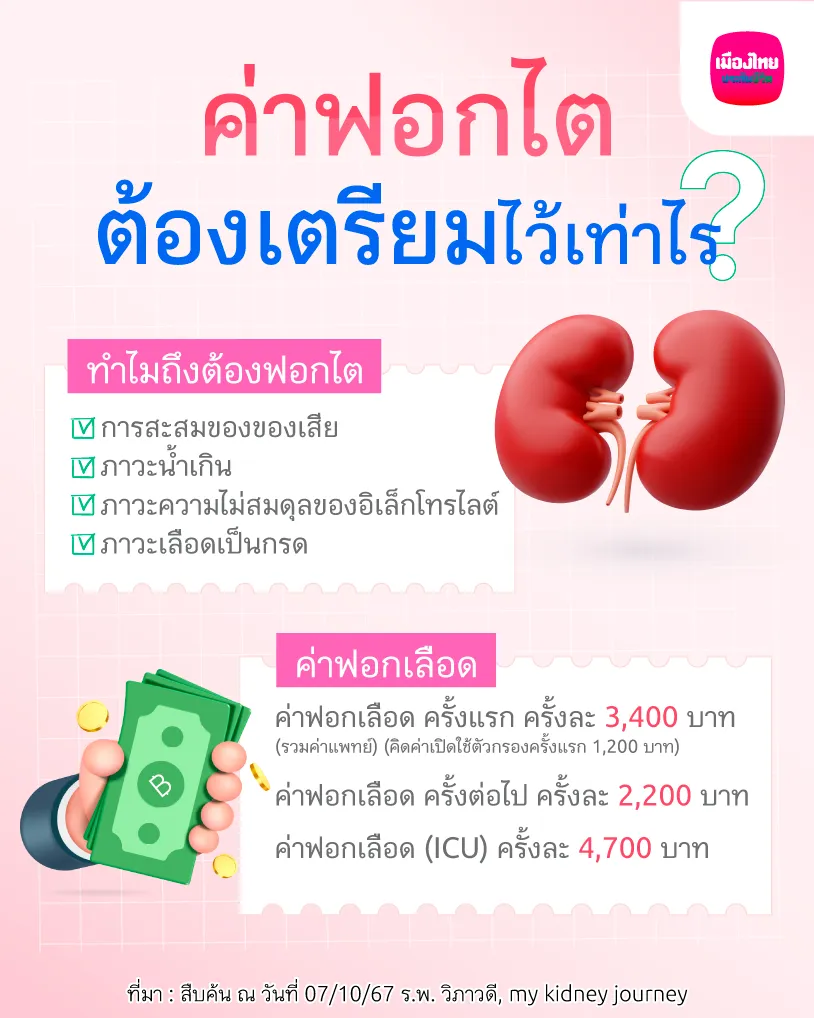
Dialysis is a critical treatment that helps prolong life and improve the quality of life for patients with kidney disease. When the kidneys fail, the body experiences serious problems such as:
- Waste buildup: Toxins accumulate in the blood and tissues, leading to symptoms such as nausea, vomiting, fatigue, loss of appetite, muscle cramps, and even cognitive impairment.
- Fluid overload: The body retains excess fluid, resulting in swelling in the hands, feet, and face, as well as high blood pressure and shortness of breath.
- Electrolyte imbalance: Abnormal levels of sodium, potassium, and calcium affect the heart, muscles, and nervous system.
- Acidosis (acidic blood): When the kidneys can’t remove acid, the blood becomes acidic, affecting the function of major organs.
2. Types of Dialysis
Dialysis is essential for patients with chronic or acute kidney failure. The choice of treatment depends on the patient’s overall health, lifestyle, convenience, and medical advice. Currently, there are two main types of dialysis:
1. Hemodialysis (Blood Dialysis)
This is the most common method. The patient’s blood is passed through a dialysis machine that removes waste and extra fluids before returning clean blood to the body.
Advantages:
- Highly effective in removing waste and excess fluid
- Dialysis sessions can be adjusted to meet the individual needs of each patient.
Disadvantages:
- Requires regular visits to a dialysis center or hospital
- Each session takes several hours.
- Possible side effects include low blood pressure and muscle cramps
2. Peritoneal Dialysis (PD)
Peritoneal dialysis is a treatment method that uses the lining of the abdominal cavity (peritoneum) as a natural filter. Dialysis fluid is introduced into the abdominal cavity to absorb waste products and excess fluid from the blood.
Advantages
- Can be performed at home without hospital visits
- Offers greater lifestyle flexibility compared to hemodialysis
Disadvantages
- Requires multiple fluid exchanges each day
- Higher risk of infection (peritonitis)
- May cause abdominal bloating or discomfort
Preparing for Dialysis
- Consult a doctor for personalized medical advice before starting dialysis.
- Follow a dietary plan prescribed by your doctor to manage your intake of protein, potassium, and phosphorus.
- Maintain overall health with regular exercise and adequate rest.
Living After Dialysis
- Follow your doctor’s recommendations, take prescribed medications, and attend follow-up appointments.
- Adhere to dietary guidelines from a nutritionist.
- Engage in regular physical activity to strengthen your body.
- Care for your mental health. Dialysis can impact emotional well-being, so consider seeking counseling or consulting with a psychologist if needed.

3. 5 Warning Signs You May Need Dialysis
When kidney function declines severely and can no longer filter waste effectively, the body develops certain symptoms that indicate the need for dialysis:
- Pulmonary Edema – fluid and toxins accumulate in the lungs, causing shortness of breath.
- Uremia – buildup of toxins in the blood affects the nervous system, leading to confusion, fatigue, or disorientation
- Metabolic Acidosis – excessive acid buildup in the body disrupts organ function
- Sodium and Fluid Retention – leads to swelling, high blood pressure, and risk of heart failure
- Pericarditis or Pleuritis – inflammation of the heart or lung lining due to toxin buildup
⚠️ If you experience these symptoms, seek medical attention immediately for diagnosis and treatment.
Risk Factors for Kidney Disease
- Diabetes is the leading cause of chronic kidney failure.
- Hypertension – long-term high blood pressure damages blood vessels in the kidneys.
- Glomerulonephritis – both acute and chronic kidney inflammation
- Genetic Disorders – inherited conditions affecting kidney health
- Urinary Tract Infections – recurrent infections can harm the kidneys.
- Certain Medications – long-term use may damage kidney function.
How to Prevent Kidney Disease
Kidney disease poses a serious health risk, but prevention is possible through healthy daily habits:
- Control Blood Sugar – crucial for diabetic patients, as diabetes is the top cause of kidney disease.
- Manage Blood Pressure – maintaining normal blood pressure reduces kidney strain.
- Maintain a Healthy Weight – Being overweight increases the workload on the kidneys.
- Exercise Regularly – helps control blood sugar, blood pressure, and overall health.
- Eat a Balanced Diet – focus on vegetables, fruits, and whole grains; avoid high-salt, processed, and high-fat foods.
- Stay Hydrated – Drinking enough water supports kidney function and helps flush out waste.
- Avoid Smoking – smoking damages blood vessels, including those in the kidneys.
- Schedule Regular Checkups – routine screenings help detect kidney disease early.
4. How Much Should You Prepare for Dialysis Costs?
The cost of dialysis is a major concern for many patients because it is a recurring expense that can become a heavy financial burden. The total amount varies depending on several key factors, including:
- Type of dialysis – hemodialysis with a machine vs. peritoneal dialysis
- Frequency of treatment – number of sessions per week
- Hospital or clinic – each facility charges different service fees.
- Benefits and coverage – government healthcare, civil servant benefits, or private health insurance can help reduce expenses.
Factors Affecting Dialysis Expenses
- Dialysis service fees – including equipment, tools, and dialysis solutions
- Medical fees – doctor consultations, lab tests, and related treatments
- Transportation costs – travel to and from the hospital.
- Meals – for inpatients requiring overnight stays
- Medication – drugs for managing complications
Dialysis Cost Breakdown
For patients with chronic kidney disease, dialysis requires long-term treatment and can lead to escalating expenses that affect personal savings and family finances. Below is an overview of typical costs:
- First hemodialysis session: 3,400 THB (including doctor’s fee) + one-time filter activation fee of 1,200 THB
- Subsequent hemodialysis sessions: 2,200 THB each
- Hemodialysis in ICU: 4,700 THB per session
If you require one session per week at 2,200 THB each, the monthly cost is around 8,800 THB.
If you require three sessions per week, the monthly cost increases to 26,400 THB.
Note: Prices are subject to change without notice.
Why Financial Planning Matters
Because dialysis is a long-term medical expense, financial planning is crucial. Preparing in advance helps you manage ongoing dialysis costs effectively without depleting your savings or impacting your daily living expenses. Maintaining good health also reduces the risk of complications and lowers additional medical costs.
Health is unpredictable, but your financial planning doesn’t have to be. Protect yourself with the right coverage today.
Care Plus Health Coverage – For Cancer and Chronic Kidney Disease
- Medical coverage up to 5 million THB per illness per year
- Premiums under 12 THB per day*
- Covers both inpatient (IPD) and outpatient (OPD) treatment
- Access to advanced diagnostics: MRI, CT Scan, PET Scan
- Access to modern cancer treatments: Targeted Therapy, Immunotherapy, Stem Cell Transplant
- Coverage for kidney failure treatment: peritoneal dialysis, high-efficiency dialysis, and kidney transplant
- Eligible for new applications up to age 80
- Coverage continues up to age 99
For More Information
☑️ Call 1766 (24/7)
☑️ Contact a Muang Thai Life Insurance agent, or visit any branch of Kasikorn Bank or Land & Houses Bank
Premium sample: Male, age 40, selecting cancer and chronic kidney disease coverage plan of 5 million THB, annual premium payment.
- Medical service coverage applies to cancer and/or chronic kidney disease treatment methods as specified by the company.
- Coverage applies only while the primary life insurance policy is in force.
- Premiums may be tax-deductible, subject to the regulations of the relevant revenue department.
- Policy approval is subject to the company’s underwriting criteria.
- Please review the coverage details, terms, and exclusions carefully before making a purchase.
Sources (as of 07/10/2024):