


Longevity Economy: How to Plan Wealth, Health, and Retirement at 100
Living a longer life was once purely a cause for celebration. Today, however, it is simultaneously emerging as one of the modern era's greatest challenges.
Advancements in medical technology, improved healthcare access, and widespread nutritional knowledge are steadily extending life expectancies worldwide. Numerous countries are fully entering aged societies, with a rapidly growing population reaching 90 or even 100 years old. Consequently, the fundamental question is no longer merely "How long will we live?" but rather: "Will we have sufficient financial resources to sustain ourselves until the end of our lives?"
This reality marks the rise of the "Longevity Economy"—a global trend reshaping financial systems, employment structures, healthcare models, and personal life planning.
Historically, life followed a simple three-stage formula: Learn – Work – Retire. In today's world, that equation is obsolete. Retiring at age 60 with a life expectancy extending another 35–40 years means your accumulated savings must support you for nearly half of your lifetime.
What exactly is the Longevity Economy? Why must the modern generation begin managing both wealth and health today? Read on to discover strategic life planning insights for an era of extended longevity—and prevent the risk of outliving your financial resources.
Key Takeaway
- The Longevity Economy Reshapes Society: As average lifespans reach 80 to 100 years, older adults remain active consumers, requiring an overhaul of traditional financial, career, and retirement frameworks.
- Mitigate "Longevity Risk": Outliving your savings is a real threat when retirement spans 30–40 years. Passive cash saving is insufficient against rising medical inflation and living costs.
- Build Long-Term Sustainable Cash Flow: Start retirement planning early to maximize compound growth, build multiple income streams, and invest strategically to outpace inflation.
- Health Is Your Primary Financial Asset: Emphasize preventive healthcare, maintain mental vitality, and secure health insurance coverage to protect your life savings from major medical expenses.
Quick Navigation: Jump to a Topic
- What Is the Longevity Economy? Why Is Everyone Paying Attention?
- As Lifespans Extend, Outliving Your Savings Could Become a Reality
- Financial Management in the Longevity Economy: Ensuring Your Funds Last to Age 100
- Health: The Single Most Vital Asset in an Era of Extended Longevity
- How to Start Preparing for the Longevity Economy Today
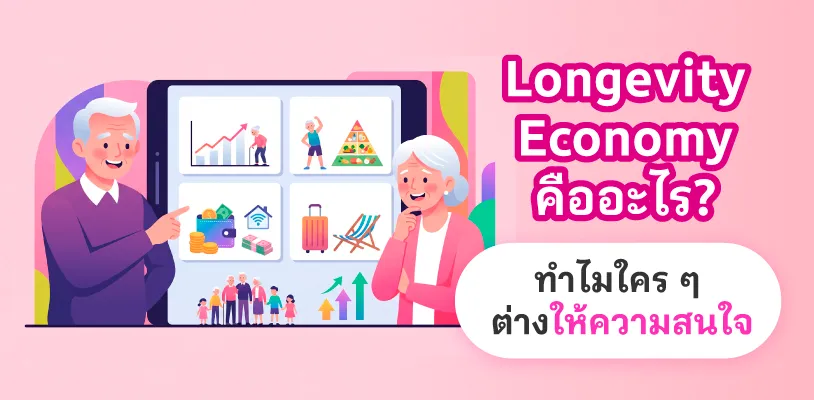
What Is the Longevity Economy? Why Is Everyone Paying Attention?
The Longevity Economy refers to an economic paradigm shift driven by extended global lifespans, significantly transforming lifestyles, employment, savings, investment habits, and consumer behavior.
Simply put, the world is entering an era where older adults are no longer a demographic minority. Instead, they constitute a vast population segment that continues to live actively, work, spend, and exert substantial influence on the global economy. This shift necessitates a major transformation across businesses and financial systems—ranging from healthcare, medical technology, wellness nutrition, and senior housing to long-term financial and insurance solutions designed for extended retirement.
Why People Are Living Longer Today
Key factors contributing to the increase in global average life expectancy include:
- Accelerated advancements in medical technology
- Improved access to vaccines and therapeutics
- Greater health consciousness and self-care
- Higher quality food and nutritional standards
- Widespread adoption of preventive health check-ups
Living Longer Does Not Mean Spending Less
While technological advancements enable humans to live longer, living expenses increase accordingly—particularly healthcare costs. As age advances, the risk of chronic conditions such as diabetes, hypertension, heart disease, cancer, or dementia rises proportionally.
The pressing concern is that many people still rely on conventional financial planning—saving for a retirement period of only 15–20 years—when in reality, post-retirement living expenses may extend for 30–40 years. This is precisely why "wealth management" has become the heart of the Longevity Economy.

As Lifespans Extend, Outliving Your Savings Could Become a Reality
One of the greatest financial vulnerabilities in the Longevity Era is "Longevity Risk"—the risk of outliving your accumulated savings. In the past, many people retired at age 60 and lived for another 10–15 years. Today, however, retirement can easily span 30–40 years. This means that financial management today requires a much longer-term perspective than ever before.
| Risk Factor | Traditional Planning Model | Longevity Economy Reality |
|---|---|---|
| Post-Retirement Duration | Planned for 10–15 post-retirement years (Life expectancy 70–75) | Must fund 30–40 post-retirement years (Life expectancy 85–100) |
| Healthcare Expenditures | Assumed minimal medical needs and basic routine care | Severe chronic diseases and long-term care require significant capital |
| Inflation Impact | Relied primarily on cash savings and basic bank deposits | Inflation erodes cash value; active investing is required to outpace costs |
| Employment Career Model | Abrupt career end and complete work stop at age 60 | Extended career, phased retirement, or flexible cash flow streams |
A long life is undoubtedly a blessing. However, without sound financial management, retirement years can become a financial burden rather than a peaceful stage of life. Therefore, as the world moves deeper into the Longevity Economy, proactive financial planning becomes increasingly vital.
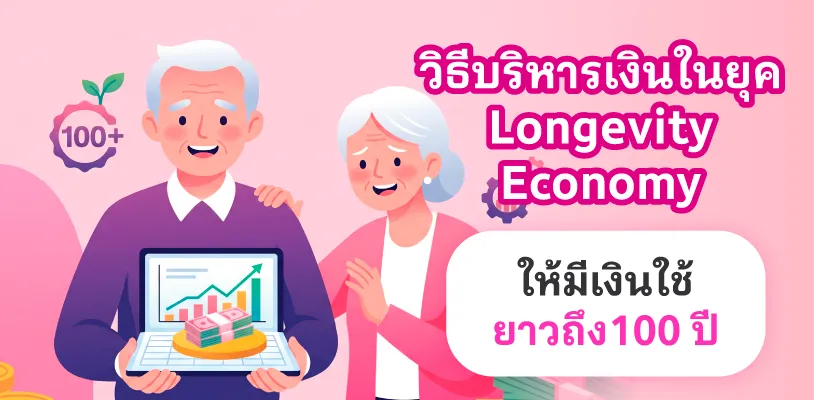
Financial Management in the Longevity Economy: Ensuring Your Funds Last to Age 100
As the world evolves, our financial mindset must adapt accordingly. Wealth management in the Longevity Era goes beyond simple cash accumulation; it requires strategic planning to ensure our financial resources sustain us for as long as we live.
1. Start Retirement Planning as Early as Possible
The single most critical element in wealth management is time. The earlier you begin, the more effectively compound interest works in your favor. For instance, an individual who begins investing THB 5,000 per month at age 25 may ultimately accumulate a larger nest egg than someone who starts investing THB 10,000 per month at age 40—simply because time is the most potent catalyst in wealth creation.
2. Diversify Revenue Streams & Invest to Outpace Inflation
In an era of extended lifespans, relying on a single income source carries significant risk. Build Multiple Income Streams and allocate capital into growth assets like mutual funds, equities, or real estate to outpace inflation based on your personal risk tolerance.
3. Ring-Fence Healthcare Funds & Plan Estate Distribution
Medical care represents one of the largest expenditure categories for older adults. Maintaining a dedicated health emergency fund or securing health insurance safeguards your savings. Simultaneously, proactive estate planning addresses tax liabilities, debt obligations, and family asset distribution while healthy.

Health: The Single Most Vital Asset in an Era of Extended Longevity
Regardless of how much wealth one possesses, poor health can severely compromise happiness in the long run. In the Longevity Economy, the concept of "Healthy Longevity"—living a long life with high physical and mental vitality—is far more important than mere lifespan extension.
1. Preventive Healthcare Takes Precedence
A key trend in longevity is "Preventive Healthcare," which encompasses annual health check-ups, weight management, regular exercise, adequate sleep, stress reduction, and healthy dietary choices, as prevention generally incurs lower costs than treating severe illnesses.
2. Mental Health Is Just as Crucial as Physical Health
Older adults frequently navigate challenges such as loneliness, depression, bereavement, and financial stress. Maintaining strong social support networks, engaging in meaningful hobbies, and participating in fulfilling activities are essential for sustaining long-term well-being.
How to Start Preparing for the Longevity Economy Today
Working-age adults are the demographic that needs to prepare the earliest, as starting early provides a far greater opportunity to build long-term financial security.
- Shift Your Mindset on Retirement: Embrace lifelong learning, navigate multiple career transitions, engage in flexible work arrangements, or transition into phased retirement.
- Build Financial Discipline: Set aside savings before spending, maintain an emergency fund, invest regularly, and minimize unnecessary debt.
- Invest in Health from a Young Age: Prioritize physical wellness early to decrease the risk of severe chronic diseases and reduce future medical expenses.
- Learn About Risk Management and Insurance: Utilize health insurance, critical illness coverage, life insurance, and retirement plans as a financial buffer against unexpected life events.
The Longevity Economy highlights how modern advances enable people to live longer lives. However, without proper planning, we inevitably face prolonged financial, health, and quality-of-life challenges.
Financial management and health prioritization must be planned together far in advance. Reaching 90 or 100 years of age should be a golden era enjoyed with complete financial peace of mind.
One effective tool for building long-term security is a health insurance plan tailored to your lifestyle and personal goals—such as Health Insurance options like D Health Lite , thoughtfully curated for you to offer customizable, lump-sum medical coverage at an accessible price! In a future filled with uncertainty, having a dependable plan in place allows you to navigate the long journey ahead with absolute peace of mind.
Source: Retrieved on 21 April 2026
🔖 Thairath