


Survive this heat! How to drink enough water
April is the hottest month in Thailand. Besides dealing with extreme heat, health concerns, especially dehydration, become a serious issue. High temperatures cause excessive sweating, leading to significant water loss. Without enough fluid intake, you may feel dizzy or even faint. This risk is higher for the elderly and people with chronic conditions such as kidney disease, diabetes, or high blood pressure.
Drinking the right amount of water not only replaces lost fluids but also helps prevent dehydration. But how much water should you drink, and what’s the healthiest way to stay hydrated? Let’s find out.

Elderly and Dehydration in Hot Weather
Older adults are more prone to dehydration because their sense of thirst tends to decline with age. This is partly due to the natural loss of muscle mass, which lowers the body’s water reserves. As a result, seniors may not feel thirsty even when their bodies need fluids.
During the summer months, this becomes more dangerous. Even mild dehydration from sweating, vomiting, or diarrhea can increase the risk of acid reflux, constipation, kidney stones, or kidney failure.
In addition, elderly individuals should avoid tea, coffee, alcohol, and sugary drinks, as these can worsen dehydration.
Hydration tips for seniors:
- Drink clean water regularly, or supplement with milk and fruit juices as needed.
- Aim for at least 8 glasses of fluids per day.
- Avoid going outdoors during extreme heat. If necessary, use protective gear such as hats, umbrellas, and long-sleeved shirts, and always carry a water bottle to stay hydrated.
Source:
🔖 Thai Health Promotion Foundation (as of 02/04/19)

How People with Chronic Diseases Should Hydrate in Summer
For individuals with chronic conditions such as diabetes or kidney disease, maintaining proper hydration is crucial. Extreme heat can cause fatigue, and without enough water, health risks can escalate even leading to life-threatening complications.
Here’s how much to drink based on health condition
- Diabetes
- Drink 1–2 glasses of water at a time.
- In hot weather, aim for about 1 liter per hour or at least 6–8 glasses per day.
- Kidney Disease
- Recommended daily intake: 1.5–2 liters, or as advised by your physician.
- Stay hydrated to ensure proper waste elimination.
- Avoid prolonged exercise under the sun; instead, exercise in well-ventilated spaces to reduce the risk of heatstroke.
Source:
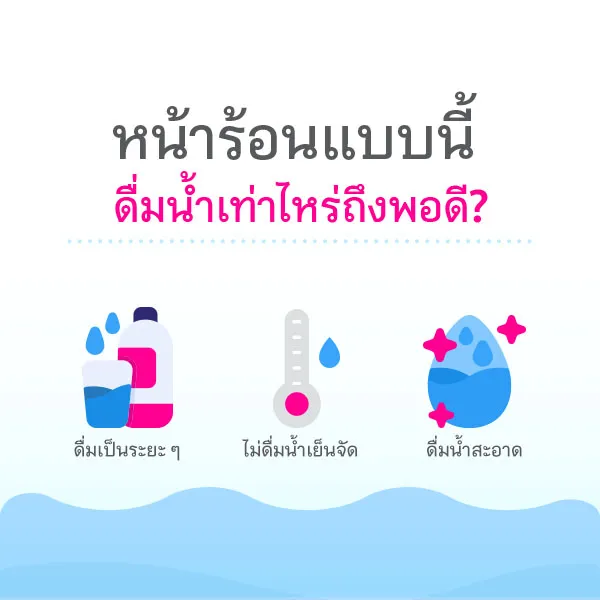
How Much Water Should You Drink in Summer?
Here are practical hydration guidelines for the hot season:
- Sip water regularly
- Drink small amounts throughout the day instead of consuming large quantities at once.
- This prevents bloating and reduces strain on the digestive system, kidneys, and bladder.
- Avoid ice-cold water immediately after heat exposure.
- If you’ve been under the sun, start with room-temperature water.
- Sudden intake of cold water can shock the body and disrupt its balance.
- Calculate your ideal daily intake.
- A general formula: Body weight (kg) × 2.2 × 30 ÷ 2 = daily water requirement (ml)
- This helps tailor hydration to your body’s needs.
- Drink only clean, safe water.
- Hot weather increases the risk of foodborne illness and diarrhea. Unclean water raises this risk further.
Source:
🔖 Samitivej Hospital (as of 12/05/21)
🔖 We Fitness Society (as of 11/05/19)
🔖 Post Today (as of 05/04/19)