


What Every Cat Owner Should Know: How to Take Care of Yourself After a Cat Scratch or Bite
How should you handle cat scratches and bites?
Even the most affectionate cat can sometimes lash out, leaving you with minor scratches or bites. While some may dismiss these small wounds, ignoring them can lead to infection, inflammation, or, in rare cases, serious diseases such as rabies, especially if your cat has not received vaccinations.
That’s why proper wound care after a cat scratch or bite is essential to prevent infection and other complications.
1. Why do cat scratches and bites matter?
2. How to treat wounds caused by cat scratches or bites
3. Do you really need an injection after a minor scratch?
4. Possible diseases from cat scratches and bites

1. Why Do Cat Scratches and Bites Matter?
Many cat owners overlook small scratches, but did you know that a cat’s mouth and claws harbor a large number of bacteria? One of the most common is Pasteurella, which can cause skin and soft tissue infections.
Risks from cat scratches and bites:
● Bacterial infection: Bacteria from a cat’s mouth can easily enter the body through wounds.
● Severe symptoms: If untreated, the wound may swell, turn red, feel warm, become painful, and develop pus. Infections can spread to other parts of the body.
● Complications: In some cases, scratches and bites can lead to serious illnesses such as cat scratch disease.
● Rabies (if the cat is infected).

2. How to Treat Wounds Caused by Cat Scratches or Bites
Cats are lovable companions, but their scratches and bites should not be taken lightly. Wounds from cat scratches or bites are also at risk of infection because a cat's mouth contains large amount of bacteria. Therefore, proper wound care is very important. Here are some ways to care for a wound from a cat scratch or bite:
Clean the wound:
- Wash thoroughly with soap and running water.
- Rinse under strong running water to flush out dirt and bacteria.
- Pat dry with a clean cloth.
Apply an antiseptic:
- Use povidone-iodine or alcohol around the wound.
- Avoid applying antiseptics directly to open cuts.
Cover the wound:
- Use sterile gauze and secure it with medical tape.
- Change the dressing daily or as soon as it becomes dirty.
Monitor for infection:
- Watch for swelling, redness, warmth, pain, or pus.
- Seek medical attention if symptoms worsen.
When to see a doctor:
- The wound is deep, bleeding heavily, or has foreign objects.
- Signs of infection appear.
- The cat has no rabies vaccination history.
- You have a weakened immune system (e.g., elderly individuals, diabetic patients, or those taking immunosuppressant medications).
Prevention tips:
- Learn to recognize your cat’s behavior and warning signs before it scratches.
- Avoid disturbing cats when they are feeding or resting.
- Handle cats gently, stroking in the direction of their fur.
- Trim your cat’s nails regularly to reduce sharpness.
3. Do you really need an injection after a minor scratch?
Even a small scratch or minor bite from a cat requires proper wound care to prevent infection and complications. Whether or not you should get a rabies vaccine or other medical treatment depends on several factors:
- Depth of the wound – If it’s only a surface scratch, you may not need an injection. However, if the wound is deep, or bleeding, seek medical attention immediately.
- Location of the wound – Scratches or bites on the face or near joints carry a higher risk of infection.
- Health condition of the cat – If the cat is healthy and has regular rabies vaccinations, the risk of infection is lower.
- Your own symptoms – If the wound becomes swollen, red, warm, painful, or starts producing pus, seek medical attention right away.
Most importantly, many people wonder how soon they should get vaccinated after being bitten or scratched by a cat. The rabies vaccine is most effective when administered within 24 to 48 hours of the incident. However, the decision ultimately depends on the abovementioned factors.
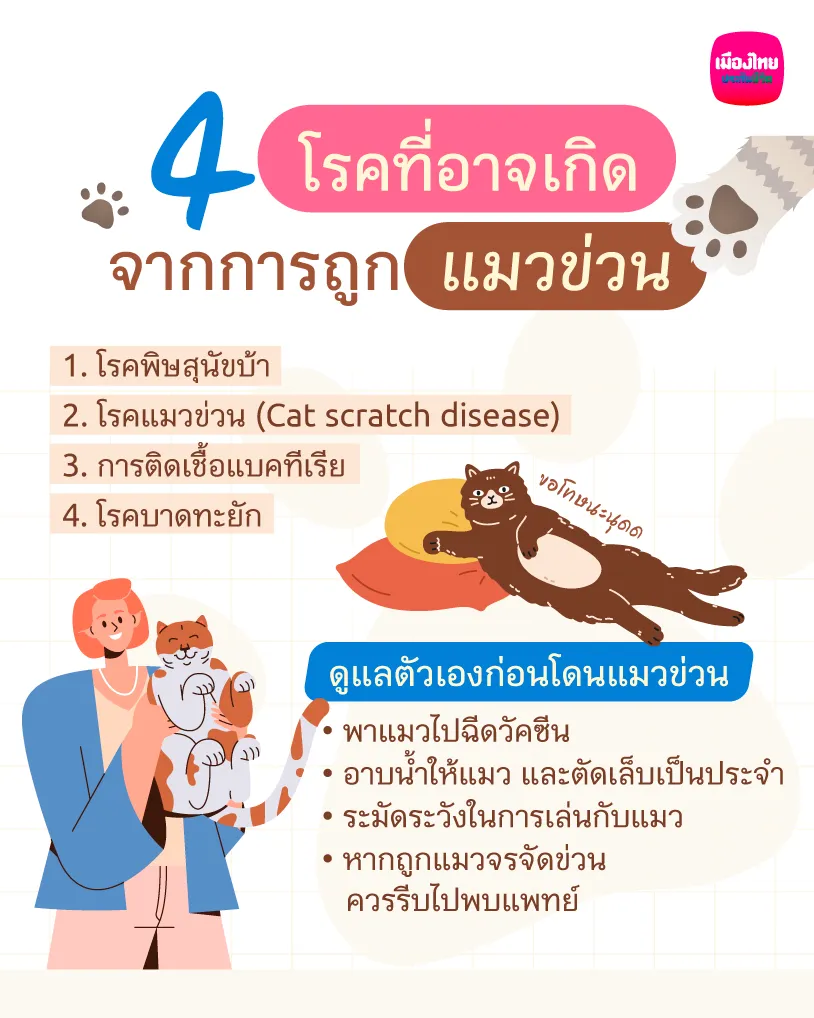
4. Possible diseases from cat scratches and bites
Although cat scratches and bites may seem minor, neglecting proper care or exposure to an infected cat can lead to serious illnesses. The most common include:
- Rabies – A deadly viral disease caused by the rabies virus, commonly found in mammals such as dogs, cats, and bats. It affects the central nervous system and, if untreated, is almost always fatal.
- Cat Scratch Disease (CSD) – Caused by a bacterial infection. Common symptoms include swollen lymph nodes, redness, swelling, pain at the wound site, fever, fatigue, and headaches.
- Bacterial Infections – Cat mouths contain various bacteria, such as Pasteurella. Infections can cause redness, swelling, heat, and the formation of pus at the wound site.
- Tetanus – A bacterial infection that can develop within 2–3 days to several weeks. Symptoms include lockjaw, muscle stiffness in the neck and abdomen, sweating, and high blood pressure.
Signs of Infection
- Swelling, redness, heat, or pain around the wound
- Pus or discharge
- Swollen lymph nodes near the wound area
- Fever or chills
- Fatigue and weakness
Prevention Tips Before a Cat Scratch or Bite Happens - Take your cat for regular rabies vaccinations.
- Maintain your cat’s hygiene by bathing it regularly and keeping its nails trimmed.
- Be cautious when playing with cats; avoid disturbing them while eating or resting.
- If scratched or bitten by a stray cat, seek medical advice immediately.
Even a small scratch from a cat bite or claw should not be ignored. Proper wound care is crucial to prevent infection and complications. The right health insurance plan gives you peace of mind by covering medical expenses.
Choose a Lump Sum Health Insurance from Muang Thai Life Assurance, created to fit your lifestyle at any stage. Because no matter your age, illness can occur at any time, whether minor or major.
For more information
☑️ Call 1766 (available 24/7)
☑️ Contact a life insurance agent
● Please study the details of coverage, conditions and exclusions before making a
decision to purchase insurance.
Source: Retrieved on 02/12/2024
🔖 Bangpakok Hospital
🔖 Vimut Hospital
🔖 Petchwet Hospital