


Campers Must Know! How to Handle Venomous Animals in the Rainy Season, with Basic First Aid
The rainy season is the time when nature becomes its most beautiful again: lush green forests, cool and comfortable air, refreshing waterfalls, and the thin mist that many people look forward to.
But for campers and hikers, this is also a time when “risk” increases unnoticed, because many animals and insects come out more during this period, especially “venomous animals in the rainy season” that may be hiding on the ground, under the tent, or even in your shoes.
And what many people overlook is that when an incident actually happens, “basic first aid” is what must be prepared in case the situation arises.
Key Takeaway
- Damp Weather Increases Animal Activity Snakes, centipedes, scorpions, bees, and hornets are commonly active and seeking shelter during the rainy season.
- Proactive Campsite Safety Choose open, clear ground away from woodpiles or dense brush, and always inspect shoes, gear, and sleeping bags before use.
- Proper Snakebite First Aid Keep the bitten limb completely still and immobilized below heart level; never cut, suck, or apply a tight tourniquet.
- Recognize Anaphylaxis Signals Rapidly spreading swelling, difficulty breathing, or dizziness require immediate emergency medical care.
This is a long read. Feel free to jump to any section:
- Why the Rainy Season Requires Extra Caution About Venomous Animals
- How to Protect Against Venomous Animals Before Setting Up Camp
- Basic First Aid When Bitten or Stung by a Venomous Animal
- Warning Signs That Require Going to the Hospital Immediately
- Checklist: What Campers Must Have Before a Rainy-Season Trip

Why the Rainy Season Requires Extra Caution About Venomous Animals
Before going camping, we must first understand “why the rainy season is dangerous,” because this is the season when many animals come out to forage more, food is abundant, and the damp ground suits reptiles.
Venomous Animals Commonly Found While Camping in the Rainy Season
If you are a camper, you should get to know these animals, because the area you choose to camp in, or the trail you walk through, may once have been “their home.”
- Snakes: Snakes often come out during the rainy season to forage and like to hide in damp places, such as under leaves, in woodpiles, or near rocks.
- Scorpions: They prefer staying among rocks or in wood crevices. Reaching in with a hand by accident may result in an immediate sting.
- Centipedes: Commonly encountered around moist campsite grounds. A bite causes severe localized pain and swelling.
- Bees / Wasps / Hornets: The rainy season is nest-building time; disturbing them accidentally can cause swarming attacks.
- Other Venomous Insects: Such as fire ants or blister beetles that cause severe skin allergies or burning rashes.
The important thing is that “these animals do not want to cause harm”; they defend themselves when they feel threatened. So understanding animal behavior is “the first line of defense.”
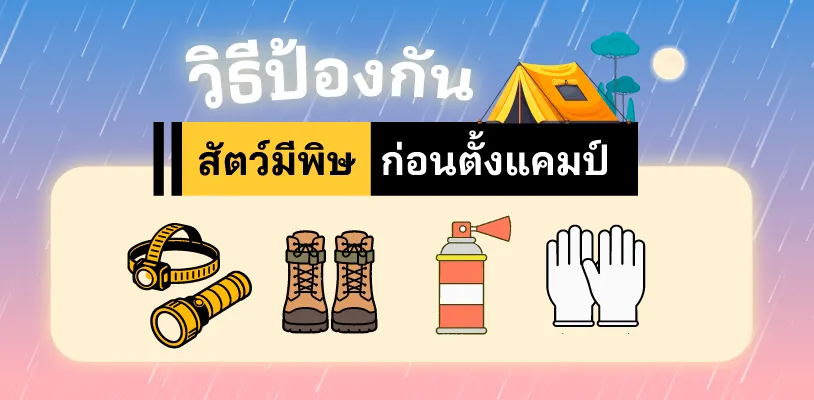
How to Protect Against Venomous Animals Before Setting Up Camp
Prevention is better than cure, especially in the forest far from medical facilities. Taking precautions beforehand minimizes risk significantly.
1. Choose a Safe Camping Spot
Before pitching the tent, inspect the surroundings carefully: avoid overgrown areas or tall grass, do not camp near woodpiles, rock crevices, or ground burrows, and stay away from known animal trails. Open, clear space equals less risk.
2. Prepare Protective Safety Equipment
Essential gear includes a bright flashlight or headlamp, effective insect repellent spray, closed-heel hiking shoes, thick work gloves, and long trousers. Importantly, never walk barefoot at night.
3. Check Equipment Before Use Every Time
Before putting on shoes or entering a tent, check and shake everything out carefully, as there have been many cases of snakes resting in shoes or centipedes hiding inside sleeping bags.

Basic First Aid When Bitten or Stung by a Venomous Animal
When an incident happens, what is needed is composure and correct first-aid methods to delay venom absorption before reaching professional care.
What to Do If Bitten by a Snake
The most important rule is staying calm and minimizing all movement, as activity speeds up venom circulation.
- Immobilize the Bitten Limb: Keep the affected area still and positioned below heart level.
- Apply Temporary Splinting: Use cloth or rigid sticks to hold the limb stationary; avoid walking or running.
- Seek Immediate Medical Care: Contact emergency services and transfer to the nearest hospital as quickly as possible.
| Venomous Creature | Recommended Action (Do) | Strict Prohibition (Don't) |
|---|---|---|
| Venomous Snake | Stay calm, keep limb immobilized below heart level, wash wound with clean water | Do not cut, suck venom, apply a tight tourniquet, or use ice directly |
| Scorpion / Centipede | Clean wound with soap and water, apply cold compress, take mild painkillers | Do not scratch or rub the wound forcefully to prevent secondary bacterial infection |
| Bee / Wasp / Hornet | Gently remove stinger immediately, wash wound, apply cold compress | Do not squeeze or pinch the sting site, as it squeezes more venom into tissue |
Warning Signs That Require Going to the Hospital Immediately
Some severe allergic reactions (Anaphylaxis) or systemic toxicities cannot wait. If any of the following critical warning signs occur, transport the victim to an emergency room immediately:
- Difficulty breathing, wheezing, or tightness in the chest
- Swelling of the face, lips, tongue, or difficulty swallowing
- Irregular heartbeat, dizziness, cold sweats, or dropping blood pressure
- Rapidly spreading swelling extending beyond 10 cm from the bite site
- Loss of consciousness or sudden altered mental state
Correct basic first aid serves to “buy precious time” and relieve immediate symptoms, but professional medical evaluation and antivenom therapy are essential.
Checklist: What Campers Must Have Before a Rainy-Season Trip
To ensure a fun and worry-free outdoor adventure during the rainy season, pack this emergency checklist before setting off:
- Comprehensive first-aid kit and essential personal medications
- Antihistamines and pain relief medications
- Elastic roller bandages, sterile gauze, and antiseptic liquid
- Insect repellent spray and soothing topical ointments
- Saved local emergency phone numbers and hospital location maps
Going camping in the rainy season is filled with natural beauty, but it also hides risks from venomous creatures. Knowing how to prevent encounters, observe surroundings, and apply correct first aid ensures you remain safe.
Unexpected incidents happen, but thorough preparation and financial backup plans give you total peace of mind—because the most enjoyable trip is the one where you return home safely.
And on days when unexpected accidents or wildlife emergencies occur, having financial preparation for emergency treatment costs provides essential peace of mind with Health Insurance that covers medical expenses during illness or injury, along with special privileges from the MTL Smile Hospital Network program, contracted partner hospitals offering room, surgery, and medication discounts, plus pre-procedure cost estimation services within 2 business days—so you can enjoy every adventure knowing you can return home safely.
Source: Retrieved on 12/03/26