


How Freelancers Can File Taxes: Smart Tips for Managing Taxes as an Independent Worker
Working as a freelancer comes with numerous benefits, including the freedom to choose projects, flexibility in setting your own schedule, and the ability to work independently. However, freelancing also brings financial challenges, especially when it comes to tax planning. Managing taxes is crucial for freelancers who want long-term financial stability.
Tax planning for freelancers goes beyond just tracking income and expenses. Since freelancers are essentially running their own business, they are fully responsible for filing and paying taxes correctly.
Quick navigation
1. How do freelancers file taxes in Thailand?
2. Taxes freelancers are required to pay
3. Filing income tax under Section 40(2)
4. Filing income tax under Section 40(6)
5. Filing income tax under Section 40(8)
6. Tax deduction tips for freelancers
1. How do freelancers file taxes in Thailand?
Freelancing (or self-employment) means working without a permanent employer or company. Simply put, a freelancer delivers work, the client pays, and the contract ends there. Freelancers can work across many fields, and their income varies depending on workload and project complexity. Unlike salaried employees, freelancers’ income is not fixed.
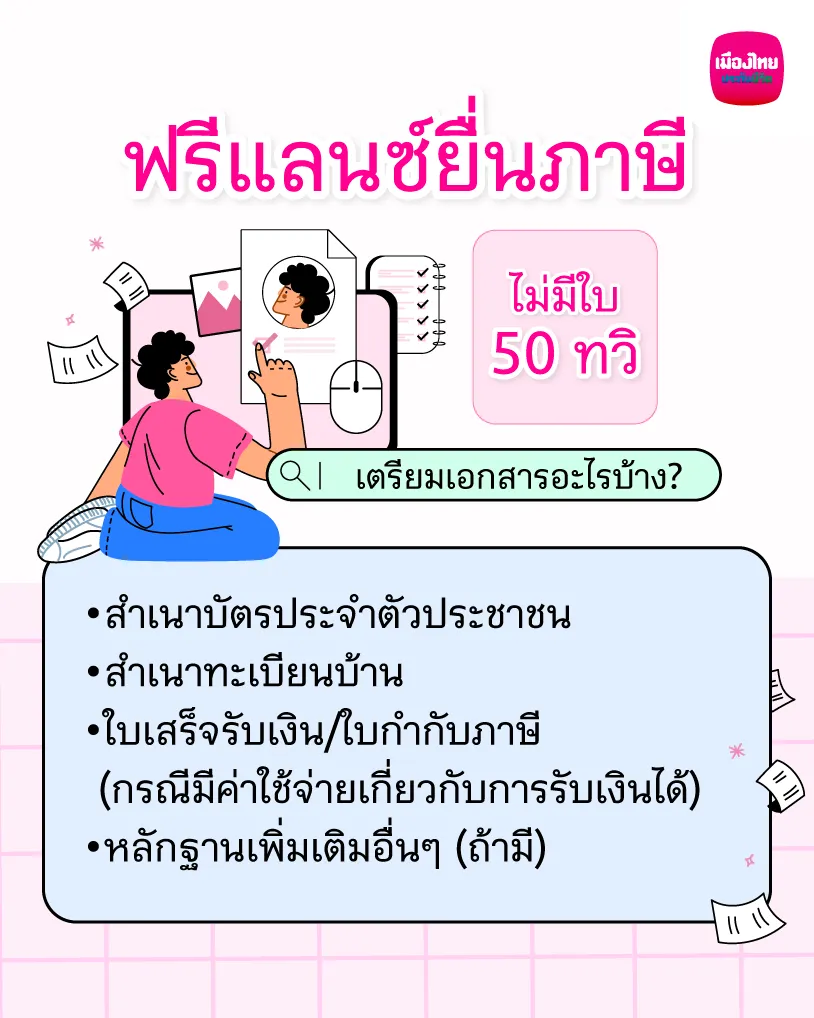
What documents do freelancers need to file taxes (without a PND 50 bis form)?
Even if freelancers don’t have a withholding tax certificate (Form 50 bis), they can still file taxes by preparing the following documents:
- Copy of Thai national ID card
- Copy of house registration (ทะเบียนบ้าน)
- Receipts/tax invoices for related business expenses (if any)
- Any additional supporting documents (if applicable)
Where can freelancers file their taxes?
- Submit directly to the local Revenue Department office
- File online via the Revenue Department website
- File online via the Revenue Department mobile application
2. Taxes freelancers are required to pay
Since freelancers do not have fixed monthly salaries like full-time employees, their tax obligations differ. Generally, freelancers may be subject to the following:
Specific Business Tax (SBT)
This tax depends on the type of business activity. Freelancers must pay SBT if they operate in specific industries defined by Thai law.
Examples of businesses subject to SBT
- Banking businesses
- Finance, securities, and credit foncier businesses
- Life insurance businesses
- Pawmshops
- Businesses operating like commercial banks (e.g., lending, guarantees, currency exchange)
- Sale of real estate for commercial profit
Learn more at the Revenue Department > https://www.rd.go.th/306.html
Value Added Tax (VAT)
VAT is levied on the sale of goods and services in Thailand, as well as on imported goods. It is generally charged at 7% of the product or service price. Freelancers must register for VAT if their annual income exceeds 1.8 million baht or if their business activities require VAT registration.
Personal Income Tax (PIT)
Freelancers must also pay personal income tax. In Thailand, income is categorized into eight types. Freelancers typically fall under Sections 40(2), 40(6), and 40(8), which are explained below.
3. Filing income tax under Section 40(2) for freelancers
Income Type 2 (40(2)) refers to income received from work or services performed under a contract, where the client and the freelancer are not in an employer–employee relationship.
Examples of income under Section 40(2)
- Commissions and referral fees
- Event hosts, MCs, models, presenters, or promoters
- Product review income from social media
- News anchors, radio hosts, and directors
- Personal managers (e.g., for actors, athletes, coaches)
- Professional services such as lawyers, engineers, architects, accountants (excluding medical professionals)
- Housing benefits provided by a client who is not a government agency
More details > https://www.rd.go.th/553.html
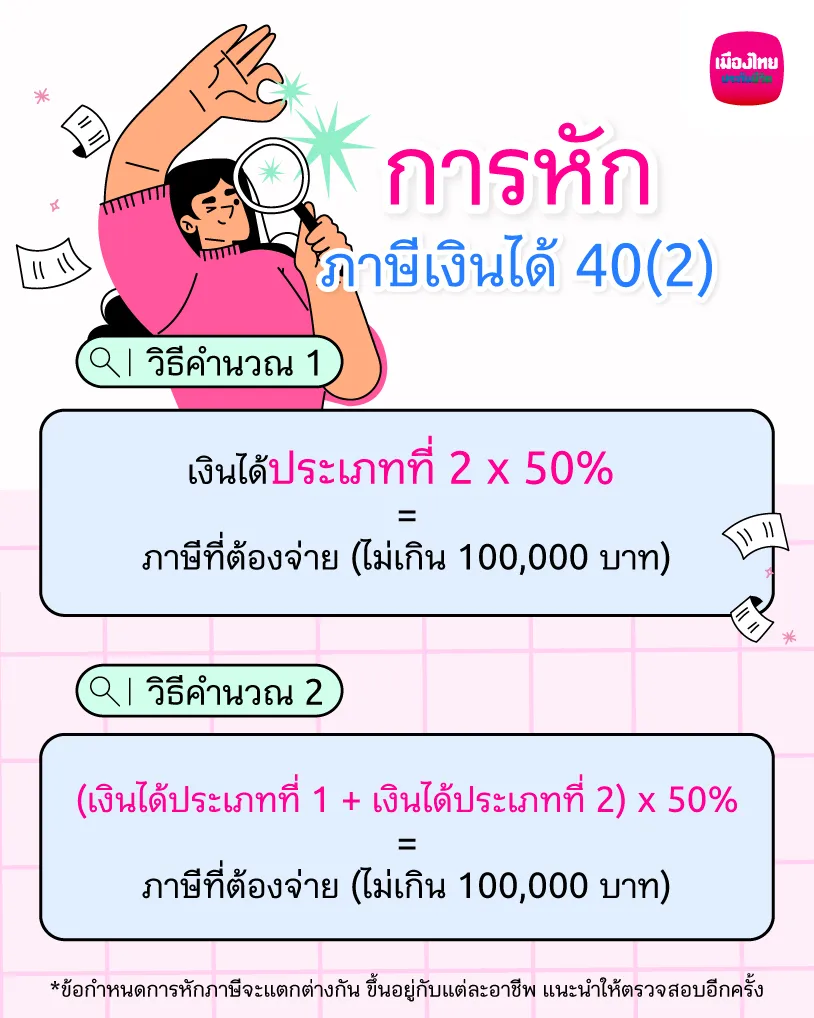
How to calculate tax under Section 40(2)
Freelancers can deduct expenses using a lump-sum deduction of 50%, capped at 100,000 THB.
Formula
Income under 40(2) × 50% = Taxable income (max. 100,000 THB)
If the freelancer also has a full-time salary (income under Section 40(1)), both incomes can be combined, and the lump-sum deduction still applies—up to the 100,000 THB cap.
Formula
(Income 40(1) + Income 40(2)) × 50% = Taxable income (max. 100,000 THB)
4. Filing income tax under Section 40(6) for freelancers
Income under Section 40(6) refers to income from independent professions. There are six professional groups in this category:
Professions under Section 40(6)
- Legal profession
- Engineering profession
- Architecture profession
- Accounting profession
- Fine arts profession
- Medical and healthcare professions
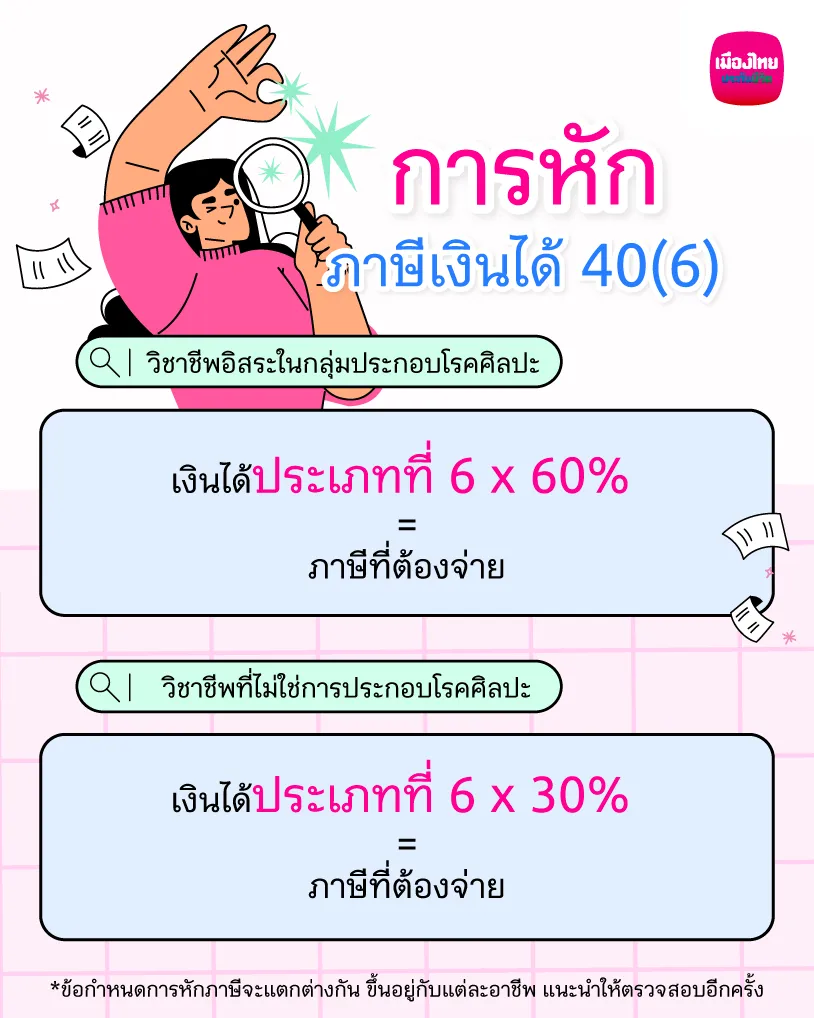
Tax deduction for healthcare professionals under Section 40(6)
Healthcare professionals include those who diagnose, treat, or rehabilitate patients and promote health. A professional license is required before practice. Deductions can be taken either as actual expenses (with proof) or as a standard 60% of total compensation.
Calculation
Income under Section 40(6) × 60% = Taxable amount
Tax deduction for other professions under Section 40(6)
Professionals in the other five groups can also choose between actual expenses or a standard 30% deduction of total compensation.
Calculation
Income under Section 40(6) × 30% = Taxable amount
5. Filing income tax under Section 40(8) for freelancers
Income under Section 40(8) covers earnings from business, commerce, agriculture, transportation, industry, real estate sales, or other occupations not specified in categories 1–7.
Examples of professions under Section 40(8)
- Performing artists or public entertainers
- Income from selling real estate
- Income from operating restaurants and beverage businesses
- Income from providing accommodation or hotel services
- Other business income sources
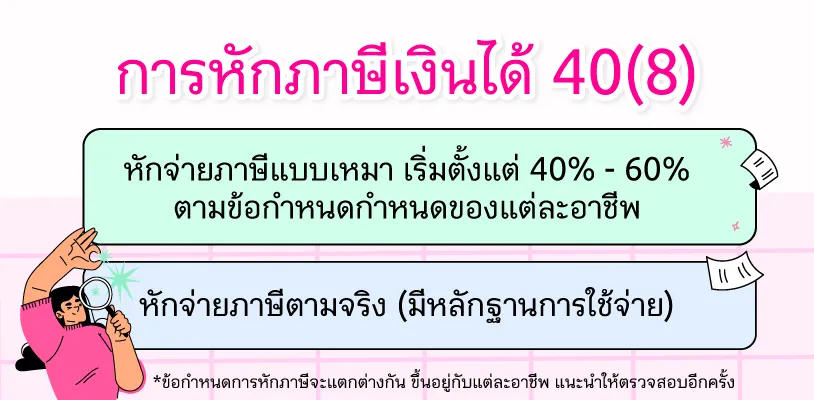
Tax deduction under Section 40(8) for freelancers
Freelancers filing under Section 40(8) can deduct expenses in two ways: (1) a standard deduction ranging from 40% to 60%, depending on the type of business as defined by law, or (2) actual expenses, provided valid expense records are available. Since rules vary by occupation, check the latest Revenue Department guidelines for accuracy.
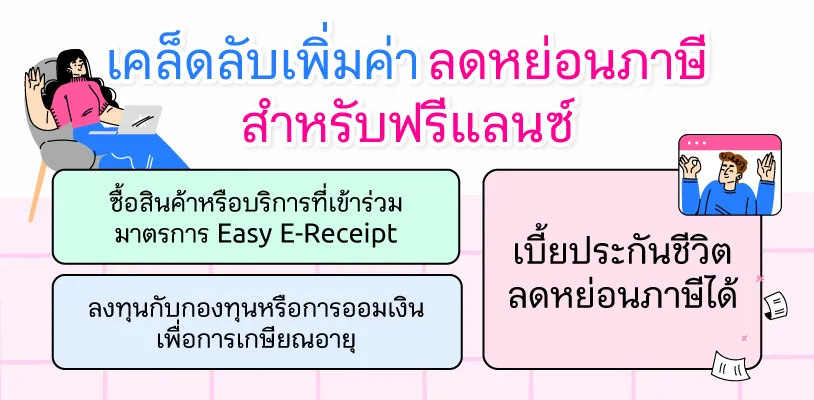
6. Tax deduction tips for freelancers
If you are a freelancer looking for ways to save on taxes, here are practical tax deduction strategies worth considering:
- Easy E-Receipt: Purchases of eligible products or services can be deducted up to 15,000 THB.
- Retirement savings: Contributions to RMF, SSF, TESG, and pension insurance qualify for deductions up to 150,000 THB.
- Life insurance: Premiums from life insurance policies can be deducted up to 30,000 THB.
Related reads
- Know before filing! e-Tax Invoice for 2025: How much can you deduct?
- Complete list of tax deductions for 2024 – Prepare before you file
Financial planning for freelancers should include setting aside tax payments in a separate account each year to avoid affecting daily expenses. Understanding tax rules and consulting a tax advisor before filing can reduce the risks of penalties or overpayment. Good tax planning helps freelancers maintain sustainable finances and avoid unnecessary stress.
Source: Accessed on 13/02/2025
🔖 SET
🔖 eTax Easy
🔖 Wealth Me Up
🔖 iTAX