


Early Warning Signs of Breast Cancer – What Symptoms Should You Look Out For?
Breast cancer is one of the most common cancers in women. Early detection greatly improves the chances of successful treatment.
Understanding the early symptoms and how to recognize them is crucial. This guide covers causes, symptoms, stages, and ways to reduce risk.
2. Early symptoms of breast cancer
4. Ways to Reduce the Risk of Breast Cancer

1. What Causes Breast Cancer?
Do you know how breast cancer starts in the body? Breast cancer develops when cells in the milk ducts grow and divide uncontrollably, forming lumps that can spread. Although the exact cause remains unknown, researchers have identified several risk factors.
Who Is at Risk of Breast Cancer?
- Gender – Women are far more likely to develop breast cancer than men.
- Age – The risk increases with age.
- Genetics – A family history of breast cancer increases your risk.
- Hormonal factors – Starting menstruation at an early age exposes the body to estrogen and progesterone longer, increasing the risk.
- Pregnancy – Women who never have children or have their first child later in life face higher risks.
- Breastfeeding – Breastfeeding can help lower the risk.
- Obesity – Excess body weight is a known risk factor.
- Dense breast tissue – Having more glandular tissue makes detection harder.
- Alcohol consumption – Regular alcohol intake raises the risk compared to non-drinkers.
- Previous breast conditions – Past breast diseases or treatments may raise future risk.
- Smoking and secondhand smoke – Both increase the likelihood of developing breast cancer.

2. Early Symptoms of Breast Cancer
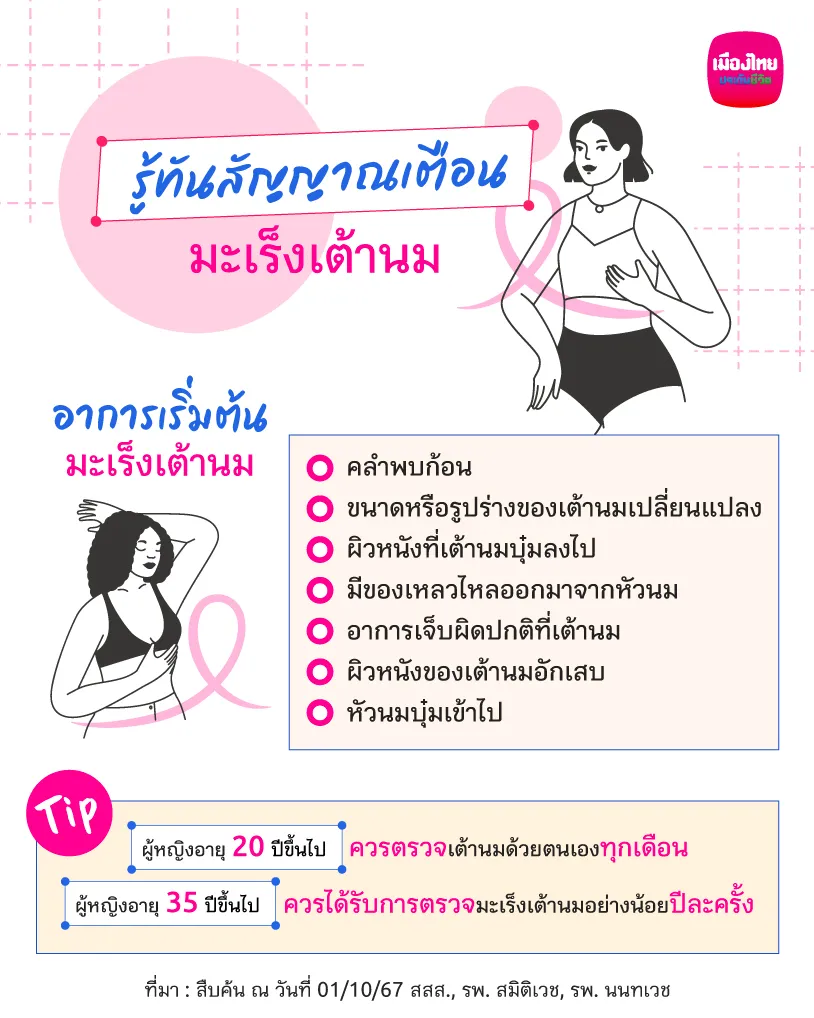
Could you recognize a warning sign of breast cancer if you saw it? In its early stages, breast cancer may not produce noticeable symptoms. For this reason, self-awareness and regular check-ups are vital. If you observe any of these warning signs, consult a doctor immediately for diagnosis and treatment.
7 Early Warning Signs of Breast Cancer
- A lump in the breast or underarm – May feel hard or soft, small or large.
- Changes in breast size or shape – One breast may look larger, smaller, or different in shape.
- Dimpling or puckering of breast skin – May look like a dimple or skin resembling an orange peel.
- Unusual nipple discharge – Clear, yellow, or blood-stained fluid.
- Persistent breast pain – Localized or chronic pain not linked to menstrual cycles.
- Redness, swelling, or rash on the breast – Inflamed skin that feels warm to the touch.
- Inverted nipple – A nipple turning inward when it wasn’t before.
3. Stages of Breast Cancer
Do you know how doctors determine the stage of breast cancer? Doctors classify the progression of breast cancer into stages, which are based on tumor size, lymph node involvement, and spread to other organs.
- Stage 0 (DCIS) – Cancer cells remain in the ducts and have not spread.
- Stage 1 – Tumor is small (≤ 2 cm) and has not spread to lymph nodes.
- Stage 2 – Tumor grows between 2 and 5 cm. It may spread to nearby lymph nodes but not beyond.
- Stage 3 – Tumor larger than 5 cm, spreading to several lymph nodes or nearby tissues.
- Stage 4 – Cancer spreads (metastasizes) to distant organs such as the lungs, liver, bones, or brain.
4. Ways to Reduce the Risk of Breast Cancer
While the exact cause of breast cancer remains unknown, there are proven lifestyle changes that can help lower your risk. Here are some recommended steps:
- Maintain a healthy weight – Keeping your weight within a healthy range helps reduce estrogen levels in the body, which is one of the risk factors for breast cancer.
- Exercise regularly – Aim for at least 30 minutes of physical activity, 5 days a week, to help lower your risk.
- Eat a balanced diet – Focus on vegetables, fruits, whole grains, and limit processed foods, high-fat meals, and foods with excessive sugar.
- Quit smoking – Smoking is a major risk factor for several cancers, including breast cancer.
- Limit alcohol consumption – Drinking too much alcohol has been linked to an increased risk of breast cancer.
- Breastfeeding – Breastfeeding has been shown to reduce the risk of developing breast cancer.
- Get regular health checkups – Perform monthly self-examinations and consult your doctor for scheduled breast health screenings.
- Seek medical advice if you have a family history – Women with a family history of breast cancer should talk to their doctor about additional preventive measures.
Why Breast Cancer Screening Is Important
Breast cancer screening helps detect cancer at an early stage before symptoms appear. This is especially crucial for women with higher risk factors, such as those over 40 or with a family history of breast cancer. Early detection increases the chance of effective treatment, improves survival rates, and reduces the severity of the disease.
Benefits of Breast Cancer Screening
- Detecting cancer before symptoms appear – Early-stage breast cancer often has no signs, making regular screening essential.
- Higher chance of successful treatment – Early detection enables more effective treatment and increases the likelihood of recovery.
- Less severe outcomes – Treating cancer in its early stages reduces complications and preserves quality of life.
- Lower treatment costs – Early treatment is often less expensive compared to advanced stages.
Common Breast Cancer Screening Methods
- Breast self-examination – Perform monthly self-checks, especially after your menstrual cycle.
- Clinical breast exam by a doctor – Schedule regular checkups with your healthcare provider.
- Mammogram – An X-ray screening test for early detection of breast cancer.
Early detection significantly improves treatment outcomes and increases survival rates.
Protect Your Health and Plan Ahead
Staying proactive with regular checkups and health planning is key. Protect yourself from the heavy financial burden of cancer treatment because your life matters.
Choose Care Plus Cancer Coverage
- Coverage limit: 5 million THB per cancer condition
- Premiums: Less than 9 THB per day*
- Covers both IPD and OPD treatment
- Access to advanced diagnostic technology: MRI, CT Scan, PET Scan
- Access to modern cancer treatment: Targeted Therapy, Immunotherapy, Stem Cell Transplant
- Eligible to apply up to age 80
- Coverage continues until age 99
More Information
☑️ Call 1766 – available 24/7
☑️ Contact a Muang Thai Life Insurance representative, or visit any Kasikorn Bank or Land and Houses Bank branch
* For female policyholders age 34, with 5 million THB cancer coverage plan, annual premium payment.
- Coverage applies to cancer and/or chronic kidney disease treatments as specified by the company.
- Coverage of riders must not exceed the policy term of the base life insurance.
- Premiums are eligible for a tax deduction, subject to the regulations of the Revenue Department.
- Policy approval is based on the company’s underwriting guidelines.
- Please read the full terms, conditions, and exclusions before applying.
Sources (Accessed: 01/10/2024)
🔖 สสส.