

Is Snoring Really Normal? Or Could It Be a Warning Sign of Sleep Apnea?
Many people dismiss snoring as a harmless habit. In reality, certain types of snoring can be a warning sign of a much deeper health issue—specifically sleep apnea, a condition many suffer from without even realizing it.
What makes it particularly concerning is that sleep apnea does more than just disrupt your sleep quality; it significantly increases your long-term risk of heart disease, high blood pressure, and cardiovascular complications.
So, which types of snoring put you at risk for sleep apnea? How much does a sleep test cost, and what treatment options should you know about? Read on to discover the essential facts… before it's too late.
Key Takeaway
- Loud Snoring with Silent Pauses Is a Danger Sign Habitual loud snoring interspersed with breathing pauses or sudden choking during sleep indicates obstructive sleep apnea.
- Silent Accumulation of Serious Illnesses Repeated nocturnal oxygen deprivation increases long-term risks of hypertension, heart disease, stroke, and microsleep driving accidents.
- Sleep Test Is the Primary Diagnostic Tool Polysomnography measures oxygen levels, brain waves, and breathing disruptions. Prices in Thailand typically start around 5,000 Baht.
- Targeted Treatments Restore Quality of Life Solutions range from lifestyle changes (weight loss, side-sleeping) to gold-standard Continuous Positive Airway Pressure (CPAP) therapy.
Short on time? Jump straight to a topic:
Snoring: A silent threat linked to sleep apnea
Snoring is often a hidden warning sign of an underlying health problem—most notably sleep apnea, a condition many people live with without even realizing it.
What makes sleep apnea particularly alarming is that it doesn't just happen once; it recurs continuously throughout the night, causing intermittent oxygen deprivation and severely disrupting your overall sleep quality.
How Is Snoring Related to Sleep Apnea?
Normally, snoring occurs when air flows through a narrowed airway, causing the surrounding tissues in the throat to vibrate. However, in some cases, the narrowing is severe enough to temporarily block the airway entirely, leading to sleep apnea. Key hallmark symptoms include:
- Loud snoring with silent pauses: Loud snoring interrupted by silent pauses where breathing temporarily stops.
- Sudden nocturnal awakenings: Waking up gaspingly or choking for air in the middle of the night.
- Unrefreshing sleep: Feeling unrefreshed or exhausted upon waking up, despite adequate total sleep time.
Why Is It Called a "Silent Threat"?
Snoring linked to sleep apnea is frequently called a "silent threat" because it occurs while you sleep, making self-detection extremely difficult, and most people view snoring as harmless. However, long-term consequences can be severe:
- Increased risk of high blood pressure (hypertension)
- Higher likelihood of heart disease, cardiac arrhythmia, and stroke
- Chronic daytime fatigue, significantly raising the risk of microsleep driving accidents
- A subtle, unnoticed decline in overall health and quality of life
Simple self-check: Do you have warning signs of sleep apnea?
Many people live with sleep apnea without realizing it because the symptoms occur while they are asleep. However, you can identify potential red flags by assessing daytime and nighttime signals.
| Time Frame | Common Warning Symptoms | Systemic Impact |
|---|---|---|
| During Sleep (Nighttime) | • Loud, persistent snoring • Intermittent pauses in breathing • Sudden waking with gasping or choking • Restless tossing and frequent night urination |
Oxygen deprivation, fragmented sleep cycles, and cardiovascular stress |
| After Waking (Daytime) | • Morning headaches or dizziness • Dry mouth or sore throat upon waking • Excessive daytime sleepiness & microsleeps • Reduced concentration, memory fog, irritability |
Incomplete brain recovery, chronic fatigue, and reduced daily productivity |
If you recognize several of these nighttime and daytime symptoms in yourself—especially loud snoring with pauses and severe daytime fatigue—it is time to consider getting professionally evaluated.
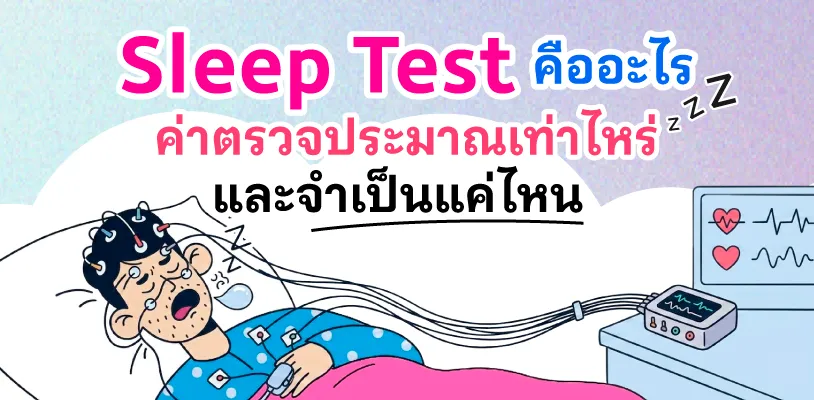
What is a sleep test, how much does it cost, and is it necessary?
If sleep apnea is suspected, the most widely accepted and reliable diagnostic tool is a formal Sleep Test (Polysomnography).
What Does a Sleep Test Measure?
Conducted overnight in a sleep center or hospital, a sleep test evaluates key physiological data while you sleep, including:
- Airflow and Breathing Effort: To record the frequency and duration of airway blockages.
- Blood Oxygen Levels: To measure how severely oxygen drops during breathing pauses.
- Brain Wave & Heart Activity: To track sleep stages, arousal frequency, and heart rhythms.
How Much Does a Sleep Test Cost?
In Thailand, sleep test prices generally range from approximately 5,000 Baht to over 15,000+ Baht. Total costs vary depending on whether it is a public or private hospital, the test level (in-lab vs. home sleep test), and physician consultation fees.

Effective treatment options for snoring and sleep apnea
Once sleep apnea is confirmed by a sleep test, medical specialists will establish a targeted treatment plan tailored to the severity of the condition and physical anatomy.
1. Lifestyle Modifications (Essential Foundation)
Weight loss reduces fatty tissue around the neck that narrows the airway. Additional habits include sleeping on your side, avoiding alcohol and sedatives before bedtime, and maintaining regular physical exercise. Best suited for mild cases.
2. CPAP Therapy (Continuous Positive Airway Pressure)
CPAP is the gold-standard treatment for sleep apnea. The machine delivers a gentle, continuous stream of pressurized air through a mask to keep the upper airway open during sleep, ensuring optimal oxygenation for moderate to severe cases.
3. Oral Appliances and Surgical Intervention
Custom mandibular advancement devices can reposition the jaw to prevent airway collapse. In cases with anatomical obstructions (e.g., enlarged tonsils or nasal polyps), surgical procedures may be recommended.
Snoring may seem like a minor issue, but in many cases, it is a critical warning sign of sleep apnea that shouldn't be ignored. Identifying symptoms early not only helps you achieve better sleep quality, but also lowers your risk of severe complications.
Because quality sleep is essential for overall health, getting diagnosed and treated early ensures you protect your long-term cardiovascular health.
And on days when unexpected health issues or chronic medical conditions arise, having proper financial protection ensures total peace of mind with Health Insurance that helps take care of medical expenses during illness, along with special privileges from the MTL Smile Hospital Network program, contracted partner hospitals offering room, surgery, and medication discounts, plus pre-procedure cost estimation services within 2 business days—so you can manage your health and life with complete peace of mind.