


Say Goodbye to Chills and Fever with These Effective Treatments! Plus Self-Care Tips
Have you ever experienced chills while running a fever? Many people experience this symptom, often accompanied by a high fever, body aches, and fatigue. Some individuals may experience chills at night, which can indicate that the body is fighting an infection or an imbalance.
Taking care of yourself at the first sign of illness and seeking medical attention if symptoms persist can help you recover faster. More importantly, understanding the causes and types of chills can inform proper self-care and help prevent potential complications.
So, what should you do when you develop a fever with chills? Let’s explore the causes, warning signs, and the fastest ways to ease the discomfort.
3. Warning Signs You Should Not Ignore
4. Fastest Ways to Reduce Fever and Chills
.webp?format=webp&width=814&height=400)
1. What Are Fever and Chills?
When you have a fever accompanied by shivering, commonly referred to as “fever with chills,” it indicates that your body is actively fighting an infection or an underlying condition.
Chills occur because the body is trying to raise its temperature to slow down the growth of harmful germs. This often results in alternating sensations of shivering and heat, typically accompanied by a high fever.
In some cases, fever accompanied by chills can indicate a more serious condition, such as sepsis (a blood infection). Without timely treatment, it may even progress to a state of shock.
While chills and fever are important warning signs, they alone cannot be used to diagnose a specific illness.
ง
.webp?format=webp&width=814&height=400)
2. Causes of Fever and Chills
Experiencing fever with chills and body aches is often a warning sign that the body is fighting an infection or another underlying health condition. These symptoms can occur in both children and adults, but the causes may differ depending on age.
Fever and Chills in Children
- Viral infections – The most common causes in children are influenza, measles, chickenpox, and dengue fever.
- Bacterial infections – For example, pneumonia, middle ear infection, or tonsillitis.
- Urinary tract infections (UTIs) – These are especially common in young girls.
- Gastrointestinal diseases -, For example, severe diarrhea.
- Drug allergies – Some medications may trigger fever and chills.
Fever and Chills in Adults and the Elderly
- Infections – Such as influenza, the common cold, or pneumonia.
- Inflammatory conditions – Including arthritis or lupus.
- Certain cancers – Some types of cancer can cause recurrent fever and chills.
- Medication side effects – Certain drugs may induce fever with chills as a reaction.
- Other conditions – Such as severe allergic reactions, hyperthyroidism, or neurological disorders.
In the elderly, additional risk factors may increase the frequency and severity of chills, including weakened immunity, chronic illnesses, or the use of multiple medications.
.webp?format=webp&width=814&height=1018)
3. Warning Signs You Should Not Ignore
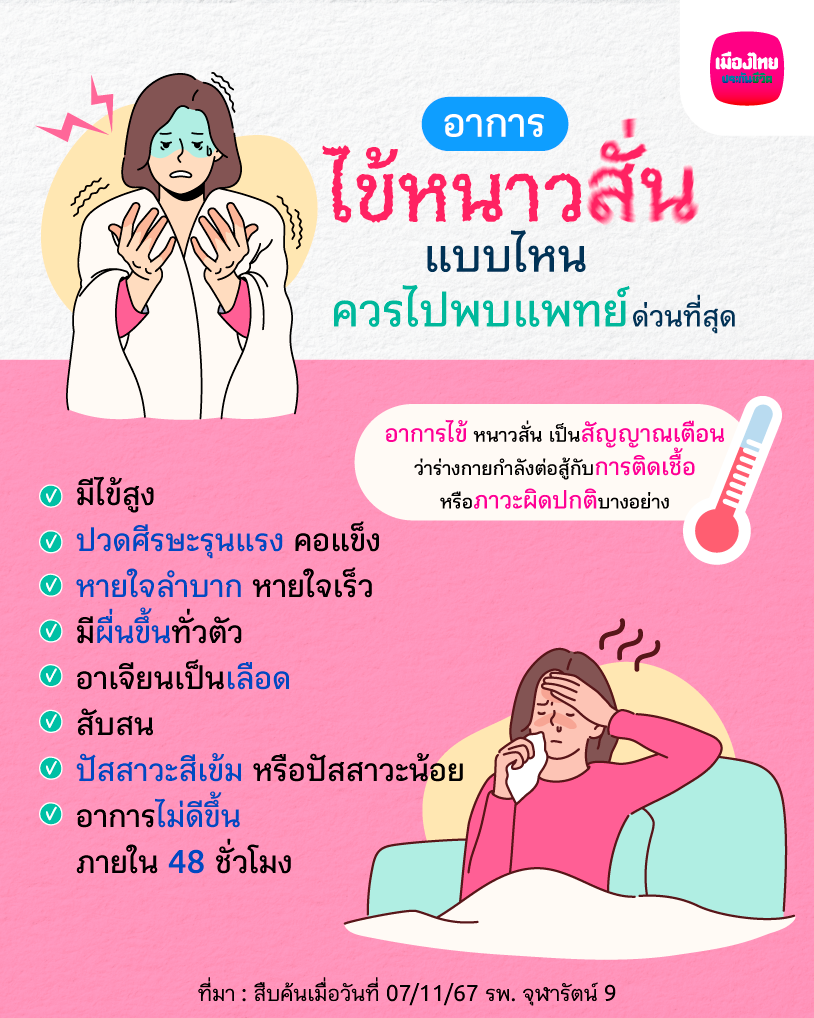
Fever, chills, and muscle aches indicate that the body is fighting an infection or an abnormal condition. However, when combined with other serious symptoms, they can indicate a life-threatening illness. Seek medical care immediately if you experience the following:
- A high fever above 39.4°C (103°F) or a persistent fever unresponsive to treatment may signal a severe infection.
- Severe headache with neck stiffness – A possible sign of meningitis.
- Breathing difficulties – Rapid breathing, shortness of breath, or wheezing may indicate lung complications.
- Neck stiffness – Inability to bend the chin toward the chest may suggest meningitis.
- Skin rash with fever – Can be a sign of infectious diseases.
- Severe abdominal pain – Especially if accompanied by diarrhea, vomiting, or bloody stools.
- Confusion or disorientation – May point to sepsis (bloodstream infection) or other serious complications.
- Dark-colored urine or reduced urination – Could indicate kidney problems.
- Severe vomiting – Persistent vomiting or vomiting blood.
When to See a Doctor Urgently
- High fever not improving with fever-reducing medicine.
- Severe headache with stiff neck
- Breathing difficulty or rapid breathing
- Rash spreading across the body
- Severe abdominal pain or vomiting blood
- Confusion and disorientation
- Dark urine or decreased urination
- Symptoms not improving within 48 hours.
Visiting a doctor promptly when these warning signs appear ensures timely diagnosis and proper treatment, reducing the risk of serious complications.
4. Fastest Ways to Reduce Fever and Chills
When you experience fever with chills, proper self-care can help relieve symptoms. However, if the fever does not improve, it’s important to seek medical attention promptly.
Self-Care Tips to Reduce Fever and Chills
- Get plenty of rest – Your body needs adequate rest to recover.
- Drink enough water – Staying hydrated helps lower body temperature and prevents dehydration.
- Eat light, easy-to-digest foods – Such as rice porridge or clear soup.
- Perform a warm sponge bath – Use a towel soaked in lukewarm water, wring it out, and gently wipe the body, paying special attention to the neck, armpits, and groin area.
- Take fever-reducing medication – For example, paracetamol (consult a pharmacist before use).
- Avoid strenuous exercise – Give your body time to rest and recover.
How to Do a Sponge Bath to Relieve Fever and Chills
One of the most common home remedies for fever with chills is sponging the body with warm water. But it’s not just about wiping with any wet cloth; there are correct techniques that make the process more effective.
Supplies You’ll Need
- A basin of warm water (enough to soak towels)
- 2–3 towels for wiping
- 1 clean towel for drying
- A small tub or container for soaking towels
Step-by-Step Instructions
- Prepare the patient – Turn off the air conditioner and remove clothing.
- Face – Gently wipe the forehead, neck, and behind the ears.
- Torso – Wipe the chest, abdomen, and back.
- Arms – Wipe from fingertips toward the heart; place towels in the folds of the elbows and armpits.
- Legs – Wipe from toes upward toward the heart; place towels in the folds of the knees and groin.
- Dry off – Use a clean towel to gently pat the body dry, and then dress in comfortable clothes.
- Check temperature – Measure body temperature again about 30 minutes after sponging.
Extra Tips for Effective Sponge Bathing
- Change the water frequently to maintain a warm temperature.
- Drink plenty of fluids to help reduce fever and maintain hydration.
- Ensure adequate rest so the body can recover faster.
- Monitor symptoms closely if the fever persists or unusual symptoms appear; consult a doctor.
Precautions to Keep in Mind
- Do not use cold water – Ice-cold towels can exacerbate shivering.
- Stop if chills increase – Provide warmth first, then resume sponging later.
- Replace towels often – Keep water at a consistent warm temperature.
Sponging with warm water is a safe and effective way to reduce fever and chills when done correctly. It helps patients feel more comfortable and recover faster. Still, if you’re concerned about persistent fever or worsening symptoms, seek medical care for an accurate diagnosis and treatment.
And because illnesses can strike at any stage of life, whether minor or serious, having health insurance from Muang Thai Life Assurance provides peace of mind.
Choose from our wide range of health insurance plans, with coverage from 200,000 THB Baht up to 100 million Baht.
✅ Elite Health Plus Covers 20–100 million Baht per year, including advanced treatments, with full inpatient (IPD) and outpatient (OPD) care(1). Premiums start from less than 157 Baht per day(2)
✅ D Health Plus Covers 5 million Baht(3), with a private standard room at any hospital. Premiums start from less than 38 Baht per day(4)
✅ เหมาจ่าย Extra Inpatient lump-sum coverage of 500,000 Baht (5). Premiums start from less than 42 Baht per day(6).
For more information
☑️ Call 1766 (available 24/7)
☑️ Contact a life insurance agent
(1) In case of selecting coverage plans of 40, 75, or 100 million Baht
(2) For an insured aged 50 years old, with coverage plan of 20 million Baht, Thailand coverage area and annual premium payment mode.
(3) In case of selecting the 5 million Baht coverage plan, the coverage limit is per hospitalization
(4) For a 34-year-old female insured, with coverage plan of 5 million Baht, deductible of 30,000 Baht per hospitalization (Top Up coverage plan), and annual premium payment mode.
(5) In case of selecting coverage plan 3, the coverage limit is per IPD hospitalization.
(6) For a 34-year-old female insured, with coverage plan 3 and annual premium payment mode.
- Coverage conditions are as specified in the policy.
- Health riders must be purchased to be attached to in-force policy.
- Coverage period of the rider must not exceed the coverage period of the life
insurance
policy that this rider is attached to. - Premium is eligible for tax deduction. Conditions are as specified by the Revenue
Department. - Conditions are as specified by Muang Thai Life Assurance.
- Underwriting is subject to the Company’s rules.
- Please study the details of coverage, conditions and exclusions before making a
decision to purchase insurance.
Sources Retrieved on 07/11/67
🔖 POPPAD
🔖 HDmall