


Beginner’s Guide to the Vegetarian Festival: What You Can and Cannot Eat
The Vegetarian Festival 2024 has arrived once again. Today, vegetarian eating (often referred to as a plant-based diet or vegan diet in English contexts) has become increasingly popular not only for spiritual reasons but also for its health benefits.
For beginners, however, questions often arise: What foods are allowed? What should be avoided? Can you drink beer during the festival? Is eating eggs permitted? Are there any fruits you should avoid?
Understanding these rules is essential so you can observe the practice correctly without inadvertently breaking the guidelines. This article will guide you through the essentials: what you can eat, what you should avoid, the health benefits, and whether vegetarian eating might cause nutritional deficiencies.
1. Reasons Why People Choose a Vegetarian Diet
2. Health Benefits of Vegetarian Eating
3. What You Can Eat and What to Avoid During the Vegetarian Festival
4. Does Vegetarian Eating Lead to Nutrient Deficiency?

1. Reasons Why People Choose a Vegetarian Diet
Vegetarian eating is no longer limited to special occasions, such as festivals. Many people now incorporate it into their daily lifestyle. The reasons vary and include:
1. Religious Reasons
- Spiritual practice: In religions such as Buddhism and Hinduism, vegetarianism is observed as a means to cultivate compassion toward animals and respect for nature.
- Worship: Eating vegetarian food is also a way to honor deities or sacred beliefs.
2. Health Reasons
- Reduced risk of chronic disease: A plant-based diet is rich in fiber, vitamins, and minerals, which helps lower the risk of heart disease, stroke, diabetes, and certain types of cancer.
- Weight control: Most vegetarian foods are naturally lower in fat and calories, making it easier to maintain a healthy weight.
- Better skin health: Antioxidants from fruits and vegetables help your skin glow and slow down cell aging.
3. Ethical Reasons
- Compassion for animals: Avoiding meat is a way to practice kindness and avoid harming living beings.
- Environmental impact: Meat production contributes to greenhouse gases, water overuse, and deforestation. Adopting a vegetarian diet can help mitigate these effects.
4. Personal Reasons
- Taste preference: Some simply enjoy the flavor of vegetarian meals.
- Lifestyle choice: A vegetarian diet can align with health-focused or wellness-driven lifestyles.
- Experimentation: Others may try vegetarian eating to see how their body responds.
5. Social Reasons
- Cultural trends: As more people adopt a vegetarian lifestyle, it has become a growing social movement.
- Convenience: With vegetarian restaurants and products widely available, it is easier than ever to adopt a vegetarian lifestyle.

2. Health Benefits of Vegetarian Eating
Switching to a plant-based diet provides numerous health advantages, including:
1. Lower Risk of Chronic Diseases
- Heart disease: Vegetarian diets are typically low in saturated fat, which helps reduce cholesterol levels and the risk of heart disease.
- Diabetes: Fiber-rich vegetables and fruits stabilize blood sugar levels, lowering the risk of type 2 diabetes.
- Cancer: Antioxidants in plants protect cells from damage and reduce the risk of certain cancers.
2. Weight Management
- Low fat & calories: Most vegetarian dishes are naturally lighter.
- Keeps you full: Dietary fiber helps you feel full for longer and reduces the likelihood of overeating.
3. Improved Skin Health
- Antioxidants: Slow down cellular aging and maintain youthful skin.
- Anti-inflammatory effects: Help reduce acne and skin irritation.
4. Better Digestion
- High fiber intake: Supports a healthy digestive system and helps prevent constipation.
5. Stronger Heart
- Lower blood pressure: Potassium from fruits and vegetables helps regulate blood pressure.
6. Stronger Bones
- Calcium sources: Leafy greens and tofu are rich in calcium, supporting bone health.
3. What You Can Eat and What to Avoid During the Vegetarian Festival
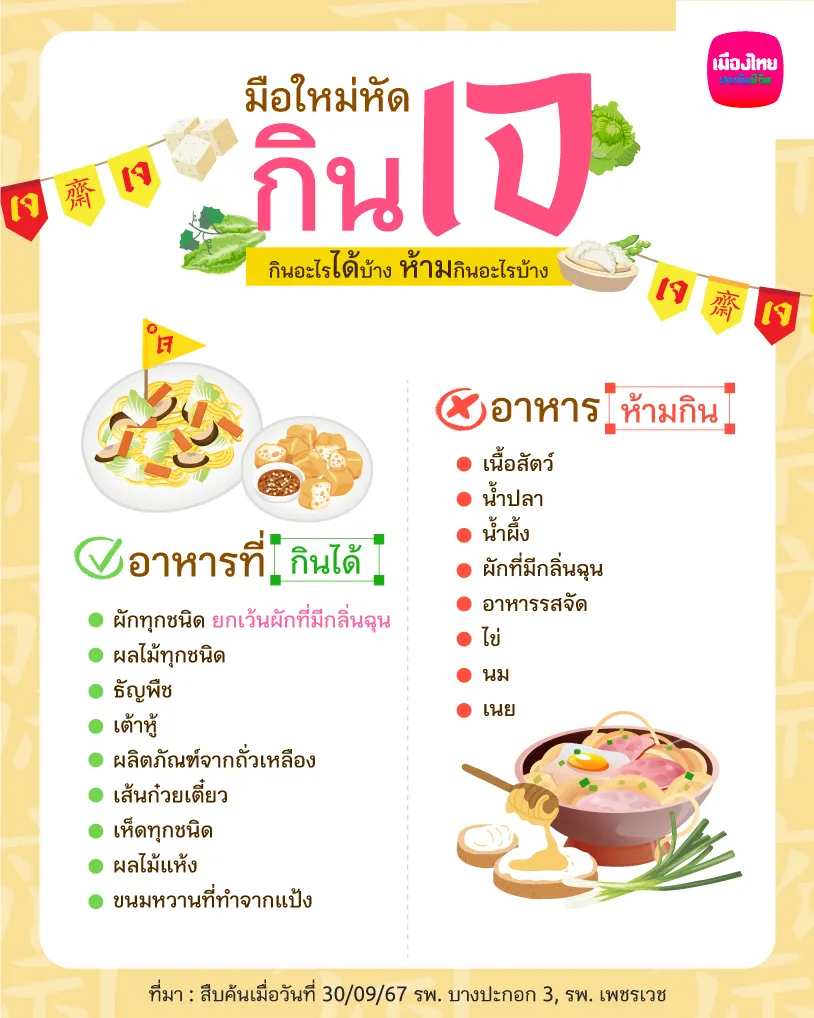
For beginners who are new to the Vegetarian Festival, many may know only that eating vegetarian means avoiding meat. In fact, the practice involves abstaining from all animal products as a form of spiritual discipline. Certain foods are also prohibited because they are believed to bring negative energy. To help you get started, here’s a clear guide to foods you can and cannot eat during the festival.
Foods You Can Eat During the Vegetarian Festival
- Vegetables of all kinds, except pungent ones such as garlic, onions, Chinese chives, and leeks
- Fruits of all varieties
- Grains and legumes such as rice, corn, and beans
- Tofu in all forms: firm tofu, egg tofu (without real egg), soft tofu pudding
- Soy-based products such as soy milk and soy yogurt
- Noodles made from flour, including rice vermicelli, wide rice noodles, and glass noodles
- Mushrooms of all kinds
- Dried fruits such as raisins and dates
- Desserts made from flour, sugar, or fruit
4. Does the Vegetarian Festival Cause Nutritional Deficiency?
This is one of the most frequently asked questions. Since the Vegetarian Festival requires the elimination of animal products, many wonder whether it provides enough of the five essential food groups. The answer is: if you plan your meals properly, you can get all the nutrients you need. However, without careful planning, deficiencies in certain vitamins or minerals may occur.
Why Nutritional Deficiencies May Happen During the Vegetarian Festival
- Vitamin B12: Found mainly in meat, fish, and dairy products. Without fortified foods or supplements, a deficiency is possible.
- Iron: Plant-based iron is less easily absorbed than iron from meat. It should be paired with vitamin C to improve absorption.
- Omega-3 fatty acids: Commonly found in fish. Without supplementation or fortified foods, a deficiency may occur.
How to Prevent Nutritional Deficiency While Eating Vegetarian (Jay)
- Plan a varied diet: Eat a rainbow of fruits and vegetables to ensure a wide range of vitamins and minerals.
- Plant-based protein: Include beans, tofu, and textured vegetable protein (TVP) to replace meat protein.
- Iron-rich foods: Eat dark leafy greens, beans, and pair them with vitamin C-rich foods like oranges and tomatoes.
- Calcium: Drink calcium-fortified soy milk and eat leafy green vegetables.
- Vitamin B12: Consider taking B12 supplements or opt for fortified products, such as soy milk enriched with B12.
- Omega-3: Include supplements or plant-based sources such as chia seeds and flaxseeds.
Choosing a Vegetarian Lifestyle: Good for Your Health and the Planet
Adopting a vegetarian diet is more than a lifestyle choice; it’s a decision that benefits both your health and the environment. With proper meal planning, you can enjoy numerous health benefits. However, if you are considering a lifelong commitment, it’s wise to consult a doctor to create a balanced nutrition plan.
And since no one can predict when illness may occur, you can boost your peace of mind with health insurance from Muang Thai Life Assurance.
Because in every stage of life, minor illnesses or major conditions can arise, presenting health challenges. With the right protection, you won’t have to worry about unexpected medical bills.
Comprehensive Health Coverage Plans from 200,000 – 100 Million Baht
✅ Elite Health Plus – Annual coverage of 20–100 million Baht, including advanced medical technology, inpatient (IPD) and outpatient (OPD) care. Premiums start at less than 157 Baht/day(2).
✅ D Health Plus – Coverage of 5 million Baht(3) per treatment, with a private standard room at any hospital. Premiums start at less than 38 Baht/day(4).
✅ Extra Lump Sum – Inpatient coverage of 500,000 Baht(5) per admission. Premiums start at less than 42 Baht/day(6).
For more information:
☑️ Call 1766 (24 hours)
☑️ Contact a Muang Thai Life Assurance representative
Important Notes:
(1) For plans with 40M, 75M, or 100M Baht coverage.
(2) Based on a 50-year-old insured person, 20M Baht coverage, Thailand coverage area, annual premium payment.
(3) Coverage of 5M Baht per admission.
(4) Based on a 34-year-old female insured, 5M Baht coverage, with a deductible of 30,000 Baht per admission (Top-Up plan), annual premium payment.
(5) For Plan 3, coverage per inpatient admission.
(6) Based on a 34-year-old female insured, Plan 3, annual premium payment.
Policy Conditions
- Coverage terms are as specified in the policy.
- Health riders must be attached to an active life insurance policy.
- Rider coverage cannot exceed the life insurance policy period.
- Premiums are eligible for tax deduction, according to the Revenue Department regulations.
- Conditions are subject to Muang Thai Life Assurance PCL’s terms.
- Insurance approval is subject to the company's underwriting guidelines.
- Please carefully review coverage details, conditions, and exclusions before making a decision.
References (retrieved on 30/09/2024):
🔖 True ID